Green is, well, everywhere.
What started as a fringe movement of environmental activists and hippie entrepreneurs three decades ago is now largely mainstream for companies, investors and consumers.


Green is, well, everywhere.
What started as a fringe movement of environmental activists and hippie entrepreneurs three decades ago is now largely mainstream for companies, investors and consumers.

We are now living in a world of hybrid autos, corporate sustainability studies, green resorts, hydrocarbon futures and a former U.S. Vice President with an Oscar award and Nobel Peace prize, thanks to his documentary film about global warming.
And it won't stop there. Soon our world will be a place where airline tickets are paperless, clothes have carbon footprint labels, and the tallest skyscraper on the face of the earth is a zero-emissions structure.
And Corporate America is right in the thick of it.
Slideshow: Famous Faces of Green
“Corporations think a lot about their corporate citizenship and green is a part of that," says Booz Allen Hamilton SVP William Jackson. “One, they believe in it and, two, they believe their reputation is on the line with their customers." (See Jackson interview.)
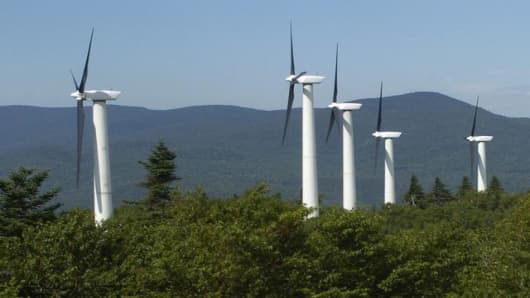
So keep Don Quixote away from those windmills, lest he cause a blackout back in town.
Shades Of Green
When it comes to the green movement these days, it’s a big world out there. The bulk of the activity surrounds energy -- alternative sources and conservation measures –- but green's reach is far and wide, from water purification to sustainable hotels and resorts to earth-friendly materials.
Green is a rapidly growing element of the business model -- as both a profit center and cost reduction tool. As more companies become green users (in saving energy and money), others become producers (in developing profitable products and services).
Here's a look at the ever widening green spectrum in business, investing and consumerism.
Applied Materials entered the solar business in 2006 after a calculated assessment of energy market potential and the company’s capabilities. It has spent more than a billion dollars building its business.
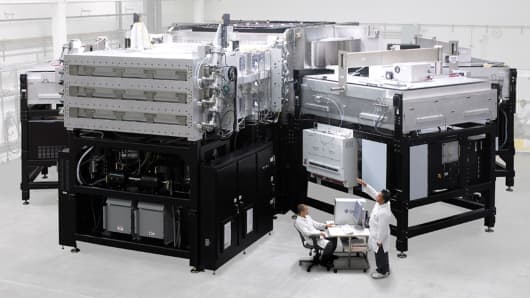
“What we’re really doing is bringing technology to bear on real problems that face the world for the next 50 years,” says CEO Michael Splinter. “The environment and energy are two fundamental problems we face. We have to do some serious thinking, some interesting technology to bring the world forward.” (Read the full interview with Splinter.)
Applied Materials is wedded to reducing the cost of solar panels and making the energy more powerful, cost effective, and competitive.
Many other companies, of course, are sold on solar. BP, for instance, has a major initiative underway.
Other companies are focusing on energy consumption and conservation, whether it is on a manufacturing, distribution or consumer basis.
Take buildings, for instance. They are now designed and constructed for optimum conditions, factoring in sunlight and wind, thus reducing the amount of energy it takes to operate as well as the amount of carbon they emit. The materials used are often from recycled sources and designed to be energy efficient. There’s now a universal, calibrated green standard known as LEED.
"People often go to transportation as the first thing because cars and planes are the most visible symptom of the problem but 70 percent of the energy we use in the US is consumed in buildings,” says Autodesk CEO Carl Bass. “And a lot of it is discretionary, like turning on or turning off a light.” (Learn more about Autodesk, Carl Bass and green building.)
Both small and world-class architectural and engineering firms use Autodesk’s software to integrate energy consumption and conservation into their design and construction plans.
Companies as diverse as JC Penney, Staples, and Sonyare constructing green buildings or campuses, while prominent skyscraper projects such as Pearl River in China and the Freedom Tower on the World Trade Center site in New York City incorporate sustainable construction to varying degrees.
In 2005, the green construction business was a $2 billion a year business. By the end of 2009, it is expected to top $60 billion.
Other companies are going green by using recycled materials, recycling their own production waste and/or conserving energy and materials in the production process.

Retailers such asMatteland Hormel Foods, for example, are reducing packaging and using recyclable materials. Intel , Texas Instrumentsand other chipmakers are recycling silicon. Dell plans to become carbon neutral.
Yet, despite a dizzying list of initiatives, skepticism remains.
"The corporate side is doing it because it has become the big and fashionable thing to do," says Bjorn Lomborg, the Danish political scientist, author and part-time devil’s advocate of the green movement. (See Q&A with Lomborg)
“Corporations are partially right in doing so because it is what people want," adds Lomborg. "It sounds great and it doesn’t cost much. But you have to ask:' What is the benefit of some of this?'”
Lomborg, who supports a carbon tax and sizable research in the area of climate change, is among those who say that the time and resources of green initiatives -– government or corporate – should be subject to more cost-benefit-analysis thinking, such as how much carbon they reduce and at what price.
Highly Entertaining
Green may be serious business but it can also be fun and relaxing.
Take the movie-making business, for example. By some measures, it is a very environmentally unfriendly business -- explosions, lots of lighting, diesel generators for on-location work.

Hollywood is at least putting its best foot forward. The Emmy Awards last year featured a recycled red carpet and the show was subbed the first "carbon neutral" Emmys. Tickets were made of banana leaf-paper.
Producers of movies have been offsetting all or some of their pollution, through carbon credits and other gestures for several years now.
This year, the comedy Evan Almighty -- a co-production of Spyglass Entertainment and Universal Pictures (a unit of NBC Universal, the parent company of CNBC.com) -- funded the planting of 2,000 trees to zero out its greenhouse gas production.
Hollywood stars have gotten into the act. Leonardo DiCaprio, Edward Norton and Cameron Diaz (see slideshow) -- among others -- have embraced the environment and climate change. DiCaprio and Norton support solar power and are pushing for its commercialization.
Slideshow: Famous Faces of Green

DiCaprio's charitable non-profit organization is a champion the cause, promoting renewable energy. His 2007 eco-documentary, The 11th Hour, received generally good reviews.
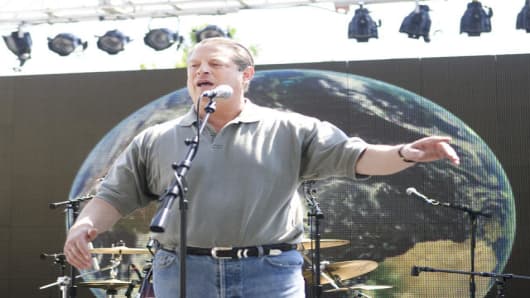
Diaz talks the talk and walks the walk; she drives a hybrid car, is reportedly trained to give Al Gore's climate presentation and made a big announcement with the former VP about Live Earth.
That musical event – a seven-continent, 24-hour music extravaganza, featuring 150 musical acts on July 7, 2007 drew an audience of 2 billion people via, TV, radio and the Internet. It even created green event guidelines, achieving a low carbon footprint by staging the concerts in the daytime and using biodegradable concession stand containers.

In December 2006, the Sundance Channel (a NBC Universal cable TV venture) launched “The Green”, "television's first regularly-scheduled programming destination dedicated entirely to the environment."
Green Room, Green Planet
Talk about going green. The hospitality and travel industries have made green a literal journey.
Starwood founder Barry Sternlicht plans 15 luxury, green hotels and residences in major cities. The first so-called "1" property being developed by Starwood Capital Group Global is in Seattle and will be completed by 2009. In addition to using sustainable design and green energy concepts, one percent of the properties' profit will go to local environmental groups.
"We’re going to try something and see if it works," says Sternlicht, whose is more confident than he sounds here. "It’s a challenging space, it's really just evolving." (Read the full interview with Sternlich.)
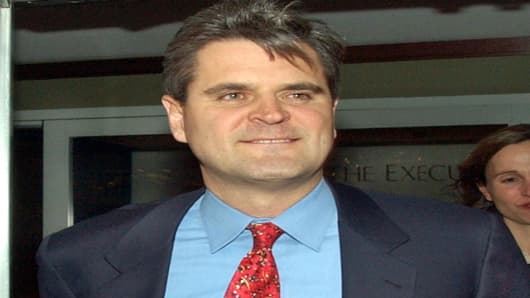
In August, 2007 AOL founder Steve Case launched Revolution Places. It's first green property -- a $800 million, 650-acre luxury resort in Costa Rica, opening in 2010 -- will recycle waste water, purchase energy from renewable sources and use other sustainable concepts.
On a less grand scale, cities and states are promoting eco-tourism or their green credentials in general. West Virginia and Wisconsin were among the first.
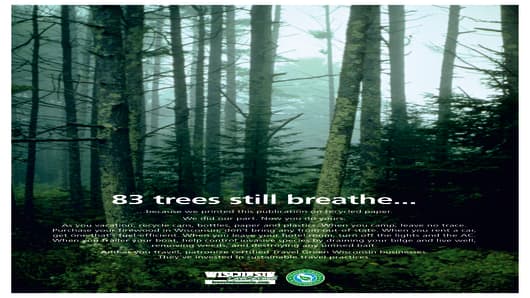
Wisconsin launched its TravelGreenWisconsin project in 2006 to promote its environmental tradition. The program is also meant to encourage more sustainable practices in its $12.8 billion dollar tourism industry, whose members must be approved by a local organization to gain entry into the program. The campaign (Watch video) has cost little money but is considered a success based on visitor surveys.
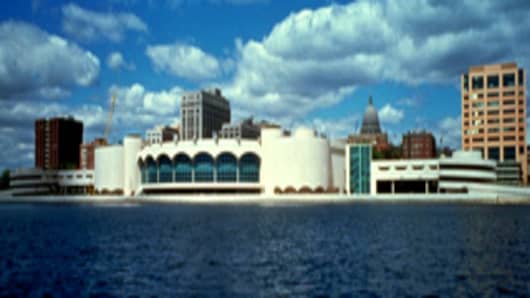
The state's efforts may be rivaled by those of Madison, the state capital. Among other things, the city has developed a sustanbility plan, created a green guide and had its 10-year old convention center retrofitted to qualify for LEED certification, the nationally accepted stand for green building and design. The city estimates it has already made three dollars on every one dollar spent because the certification has attracted a number of green conferences and events.
"What’s good for the environment is also good for the local economy," says Mayor Dave Cieslewicz, who ran an environmental business before assuming office. "These ideas have really paid off very recently as they've gelled in the public’s mind."
Investment and Investing
OK, so being green is easy -- and worthy -- but is it also profitable and rewarding for investors? In a word, yes.
This area of the green movement is red hot – from corporations to venture capitalists to retail investors.
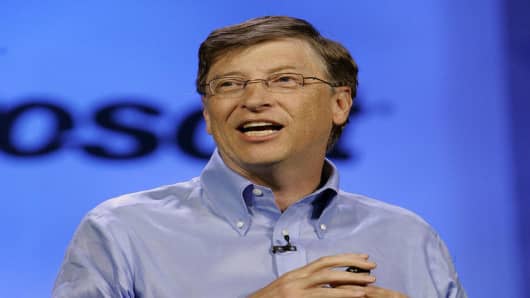
Big names in the world of business and finance – from Microsoft Chairman Bill Gates to John Doerr, a partner in the venture capital firm Kleiner Perkins Caufield & Byers --- are into green investing.
By one measure, there are now 500 green companies. Since 2006, nine green ETFs have launched, according to Morningstar, the largest of which, ClaymoorS&P Global Water, had assets of about $284 million, as of Oct. 22. (Learn more about green ETFs.)
Morningstar counts nine green mutual funds versus the broader category of socially responsible companies. The largest, Winslow Green Growth, had almost $322 billion in assets and a total return of 29.21 percent, annualized over a five-year period. (Find out what's hot in green mutual funds.)
“It’s certainly in fashion,“ says David Schoenwald, cofounder of the New Alternatives fund, which was the first mutual fund of its kind.
“There seems to be a lot of investing on momentum," adds Schoenwald, who along with his father, Maurice, started the fund on a shoestring budget in 1982 “The shareholders who have been with this firm a long time are die-hard environmentalists.” (Read the profile.)
New Alternatives now counts some 12,000 investors, holds stock in 60 companies and posted a 23.75 percent annualized total return over the past five years.
Investment in alternative energy sources are expected to grow to between $6.2 billion and $8.8 billion by 2009, according to the Cleantech Venture Network. Wind energy attracted $380 million last year compared with $1.5 million in 2005. (See related story)
Goldman Sachs has invested heavily in environmental friendly projects such cellulose-based ethanol, wind and solar energy
In July, Merrill Lynch introduced a new index, identifying industry sectors and 40 individual companies that it “believes should benefit from the growing momentum to reduce CO2 emissions and the cost of energy.”
For more than a decade, EcoSecurities has been working with companies to create emission reduction credits for greenhouse gases. The company now has offices in 20 countries.
And talk about crunching the numbers, earlier this year, a coalition of investors, state officials and environmental groups petitioned the Securities and Exchange Commission to require publicly-traded companies to assess and fully disclose their financial risks from climate change.
Consumers And Citizens of The Earth
Consumers are eating it up, whether it is buying organic food, recycling household products, joining organizations or simply going to the movies.
By one estimate, some 35 million Americans regularly buy products that claim to be earth-friendly. For example, some 325,000 hybrid automobiles are expected to be purchased this year, 29 percent more than in 2006.
Airline passengers can now buy carbon credits when they book an ticket on such airlines as Continentaland Delta.
Al Gore’s film, An Inconvenient Truth, has grossed $24.1 million in U.S. ticket sales since opening in May 2006, according to Box Office Mojo. The film is the third best-performing documentary in history.
Official membership in the Sierra Club has increased from 550,000 in 2000 to 800.000 today. Hundreds of thousands more participate in or contribute financially to its myriad efforts.
Recycling is now a way of life in households and businesses across the country. In 2005 there were 9,000 curbside recycling programs, vs. 2,000 in 2005, according to the National Recycling Coalition. Recycled aluminum, for instance, saves 95 percent of the energy cost of producing aluminum from raw materials. And on Nov. 15, America Recycles Day marks its 10th anniversary. (See the top-ten recycling items.)
Such commonplace initiatives have helped build interest in the environment, but making the complicated science of climate change more digestible will take more time.
"There’s a growing awareness that there is a problem," say Larry Filler, founder of the TransitChek program and an early proponent of incentive-based mass transit use to reduce auto congestion and emissions. "People have seen intense storms, very unusual weather on occasion, but sometimes it is not always clear what it means to them in their own area.” (Read an interview with Filler.)
The green movement – or mindset – has permeated so much of the consumer society and business world, it is inevitable that some of the many initiatives appear trivial, inconsequential or downright silly. Regardless, there are, of course, outright critics of the environmental movement, who say it is bad for business, technology and the individual.
“Environmentalism is a moral philosophy. It is definitely anti-capitalistic “ says Peter Schwartz, former chairman of the Ayn Rand Institute and author of The Battle for Laissez-Faire Capitalism. "Environmentalists want to protect nature not for mankind but from mankind, to live without the benefit of technology." (More from Schwartz.)
Schwartz is probably part of a shrinking minority -- just as the days of ridiculing tree huggers can no doubt be counted. Corporate America has gotten its arms around the business of green and is reaching down into what may be some pretty deep pockets.
