

The International Energy Agency (IEA) wants OPEC at its next meeting to keep oil production levels unchanged, at the very least, to rebuild low crude supplies, an analyst with the agency said on Wednesday.
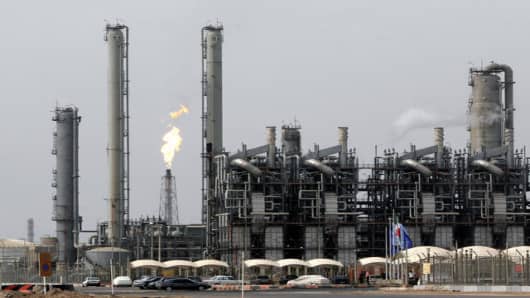
Oil Refinery
The U.S. crude price reached a new peak of $100.10 per barrel on Tuesday, one cent beyond the previous high reached on Jan. 3, but has since retreated to around $99.
The price rise was driven by concern that the Organization of the Petroleum Exporting Countries (OPEC) will hold or even cut output when it meets on March 5, as well as by uncertainty about Venezuelan and Nigerian supplies.
"We consider they (OPEC) need to continue producing to rebuild crude stockpile levels that are way below average," said Julius Walker, an oil market analyst at the Paris-based IEA, which advises 27 industrialized countries.
The IEA would of course welcome any rise in crude oil production, he said, but understood the downside risks for OPEC at a time when the global economy was weakening and hence potentially curbing oil demand.
"Despite a lot of talk, there is little weakening in oil demand so far," he added.
Walker said the significance of the oil price's rise above the $100 level was largely symbolic.
"Our position is that prices remain very high whether they are just under $100 or just above $100," he said.
"Regarding the impact on the consumer, a couple of dollars make virtually no difference at all. It's mainly a symbolic threshold," he said.