Net
- The Buckaroo and the Demand for Money
- College Flunks Four Times; Eliminates Tuition
- ECB May Be Willing to Take a Haircut on Greek Bonds
- College Flunks Four Times; Eliminates Tuition
- New York Housing Market Could Still Collapse: Analyst
- Ouch! UBS's Bonus Pool Got Whacked
- Banks Already Slipping Through New Capital Requirements
- Greek Default: Why Now May Be Best Time to Do It
- What Germans Really Think About the Greeks
- Why the Social Security Tax Fight Is Stupid
- Stuff We Missed: Wednesday, February 22
- Chart of the Day: Europe and U.S. Decoupling
- Will Greek Credit Default Swaps Fall Short?
- Kevin Book: Beware the Downside Potential In Oil Prices
- Stuff We Missed: Tuesday, February 21st
- Modern Monetary Theory’s Big Weekend: The Problem with Surpluses
- ‘Greece Fatigue’: Market Hopes Bailout Plan Will Work
- Sallie Krawcheck: The Euro Is “Fundamentally Flawed”
- Compensation Clawbacks: Bad for Banks, Bad for Shareholders
- Get Ready for Gas Prices to Hit $5 by Summer
- Playing the Banker/Lawyer Game at Stone Rose Lounge
- Memo From the Big Board: Monday Is Not President’s Day
- Government Critic John Kinnucan Arrested for Insider Trading
- Weather Service In Eye of Budget Cut Storm
- Colbert Report Suspends Production
- The Trend Initiation Test for New York Fashion Week
Call: 201-735-4638
Text Message: 917-740-8477
- RBS Records $1.2 Billion Loss After Greece Charges
- More Asset-Buying Depends on Economy: BOE
- Stocks Sputter as Investors Seek Next Catalyst
- Winners and Losers in Obama's Corporate Tax Plan
- Santorum Takes Heavy Fire in Arizona Republican Debate
- Volcker Rule Threatens Recovery: Finance Ministers
- Next Bank of England Governor: The Race is On
- Peugeot Citroen in Talks With General Motors

- HP, Dell Watch Rising China Labor Costs for Apple
- China Internet Firm Qihoo Says Citron Allegations False
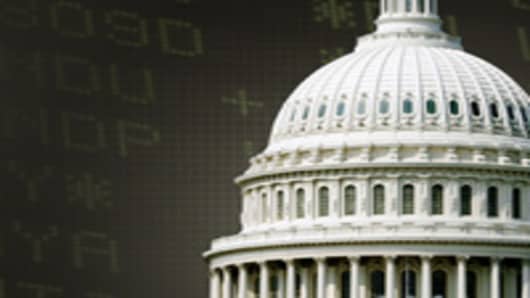
A Government Shutdown Could Shut Down Wall Street
Senior Editor, CNBC.com
![]() |
New issues of bonds and stocks could be held up during a government shutdown, since they often require registration with regulators. Initial public offerings may be impossible. Mergers could be brought to a standstill, since they often require the approval of a number of regulatory bodies.
The Securities and Exchange Commission says that while certain enforcement and market surveillance activities will continue, it will have to stop performing many of its functions in the event of a shutdown.
The frozen functions could include the registration of securities, accepting and publishing corporate filings, and processing filings related to mergers and acquisitions. The agency’s plan for exactly which functions will continue hasn’t yet been finalized.
The Federal Trade Commission and the Department of Justice are both charged with reviewing mergers and acquisitions to prevent deals that would be anti-competitive. Those reviews may be stalled in the event of a government shutdown.
It’s not clear whether the FTC or the Department of Justice would be able to accept filings for new deals. While both agencies will be able to perform some of their functions, the fate of the merger reviews is not yet known.
One part of the regulatory apparatus that won't shut down is the Federal Reserve. It doesn't rely on Congressional funds and plans to remain open for business as usual. This means that bank regulatory work continues.
The last government shut down lasted three weeks. If Wall Street were unable to perform many of its functions for weeks, it could impact revenues this quarter.
When the government shut down in 1995, the impact was not as severe because the SEC was able to continue to function because it located funds to pay employees. An SEC spokesman told the Wall Street Journal that option is not available this time.
___________________________________________
Questions? Comments? Email us at
Follow John on Twitter @ twitter.com/Carney
Follow NetNet on Twitter @ twitter.com/CNBCnetnet
Facebook us @ www.facebook.com/NetNetCNBC