- Winners and Losers in Obama's Corporate Tax Plan
- More Asset-Buying Depends on Economy: BOE
- Greece Readies Debt Swap Under Bailout Deal
- Stocks Sputter as Investors Seek Next Catalyst
- RBS Hurt by Greek Charges But Pays Bonuses
- Nissan to Recall 250,000 Cars Globally
- T-Mobile USA Wants to Grow Again
- Greek Writedown Hits Commerzbank Earnings
- Chinese Court Says Apple Can Sell iPads in Shanghai
- Wandering Through Toy Land
- Dell Is Done, But Don't Discount HP: Analysts
- Comcast Deal Could Spell Trouble for Netflix: Analyst
- Reading the Tea Leaves in RIM Shake-Up
- Sam Adams Brewer Crafts Beer for the Granddaddy of All Marathons
- Stocks to Give Up for Lent
- You Want Retail Customers? Give Them Deals: Analysts
- NJ Governor Chris Christie to Warren Buffett: 'Just Write a Check and Shut Up'
- 7 Undervalued IPO Stocks That Could Rebound in 2012
MOST SHARED
- RBS Hurt by Greek Charges But Pays Bonuses
- China Internet Firm Qihoo Says Citron Allegations False
- T-Mobile USA Wants to Grow Again
- European Shares Rise; Natixis, RBS Up on Results
- Nissan to Recall 250,000 Cars Globally
- German February IFO Index Rises 4th Month in Row
- More Asset-Buying Depends on Economy: Bank of England
- Greek Writedown Hits Commerzbank Earnings
- Japan's Okada Says Yen Still Strong, Hopes it Weakens
- Herbalife Shares Gain on Obesity Play
HOT ON FACEBOOK
Gangs, Terrorists, Mafia Make Huge Profits Selling...Cigarettes
CNBC Reporter
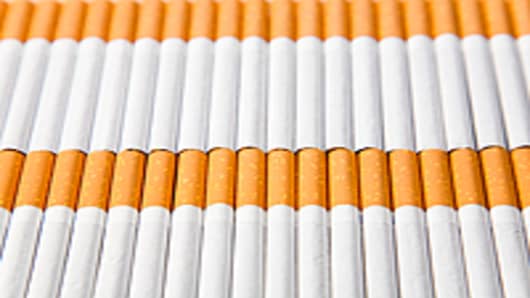
There's no better example of the law of unintended consequences than cigarette taxes in the United States.

Brian A. Shactman
CNBC Reporter
Each state sets its own rate, and the disparity is huge. Missouri's state cigarette tax is 17 cents. It's $4.35 in New York.
What's the unintended consequence? Crime.
According to the Bureau of Alcohol, Tobacco, Firearms and Explosives, the United States loses $5 billion in tax revenue every year from the trafficking of illegal cigarettes. Worldwide, it's a $100 billion problem, and it's the No. 1 economic crime in Europe.
Ashan Benedict
Special Agent, Bureau of Alcohol, Tobacco, Firearms and Explosives
"We liken it to the new prohibition era," Special Agent Ashan Benedict told CNBC for the upcoming documentary Cigarette Wars. "We haven't outlawed cigarettes yet, but it's taxed to the point where the criminals know they make a lot of money trafficking."
The crime has several variations, but it's extremely simple. The most common way: Buy cigarettes in a low-tax state and sell them in a high tax state. The tax disparity is straight profit.
"A carton of cigarettes in Virginia is $30," Benedict said. "In New York City, it can be $90 or more. That's just one carton.
"You start dealing with hundreds and hundreds of cartons, and folks are making more money selling cigarettes up north than drugs."
One truckload can translate into $1 million in cash.
Historically, the crime is considered a common racket executed by the mafia. But in 2011, the criminals range from gangs to terrorist groups. There are cases of illegal cigarette sales with ties to groups like Hezbollah and the Irish Republican Army.
"We have made cases, notably, the Charlotte Hezbollah case, where a cell out of Lebanon was trafficking cigarettes from North Carolina (a low-tax state) to Michigan (a high-tax state", said Jeff Cohen, a lawyer for the ATF. "They were using the proceeds to buy military armaments in Lebanon."
Albeit rare, those cases demonstrate that it's gone well beyond a mafia trade.
![]() |
Piet Mall | Getty Images Some traffickers are making more money selling cigarettes than they are selling drugs. |
"The organizations are much more complex involving cigarette trafficking," Cohen said.
But the crime also happens on Main Street ... every day.
CNBC found one such example while following a multi-agency sting operation (ICE, ATF, FBI, local police) in Hampton, Virginia. A local convenience store owner was selling contraband cigarettes that did not have the proper tax stamps. That basically means the taxes weren't paid.
The owner was found guilty on four counts.
![]() |
Again, the law of unintended consequences comes into play. A government that raises taxes, mainly in an effort to deter smoking. However, it has become so dependent on the tax revenue that law enforcement is going out to get that illicit money back and stop the trade.
"There are inherent contradictions," Cohen admitted. "You're taxing it to finance your programs and allegedly to make sure that people don't smoke.
"And at the same, you're saying, 'Oh, we're going to catch all the bad guys doing this.'"
Cigarette Wars premieres Wednesday, March 2 at 9p ET on CNBC, with re-airs at 10p, 12a and 1a ET.
- People who check a smartphone will soon have another option: Google-made glasses that stream information to the eyeballs.
- How does a business handle complaints on a social network site that goes out to millions of consumers?
- Dr. Ezekiel Emanuel lays out the changes ahead from the Obama healthcare legislation he helped design. Does reform mean greater access and affordability?
- Should a mom or dad stay at home to take care of the kids? It’s a tough issue these days. Here’s Suze Orman’s take.
- Corruption is a major issue in developing and developed nations. So which are perceived as the most corrupt?
- While the handheld gaming market has evolved in recent years, Sony's betting there's still money to be made.