Of course, higher dividend yields may be a positive sign; that is, a sign that dividends are robust. When that's the case, as dividends increase, the numerator in the fraction above increases and yield goes higher.
That's a good thing.
However, there's another way for yield to increase and it generated by a less favorable catalyst. An increase in yield can also be generated by declining share price.
That's not as good.
If share price goes down, the denominator in the fraction above goes down and as a result yield goes higher.
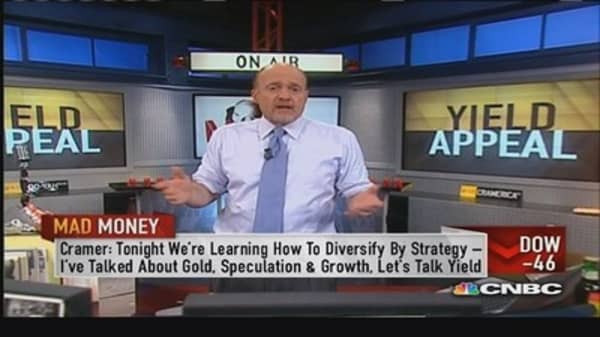
"I call the latter, accidental high-yielders," said Jim Cramer. "These are stocks that yield more than 4 percent not because of dividend increases, but because their share price has fallen far and fast, causing the yield to skyrocket."
-------------------------------------------------------------------
Read More from Mad Money with Jim Cramer:
Are you making too much money?
During rallies, don't make this mistake
Approach rally with caution
-------------------------------------------------------------------
Accidental high yielders require research, Cramer added. If shares have fallen for a reason that seems temporary, then they're probably a buy.
However, if share price has slipped for a reason that's unclear, then despite the big yield, the stock may be too hot to handle.