Go Symbol Lookup
Loading...

5 Reasons Not to Worry About the Dreaded Sequester

 Text Size  
Published: Friday, 22 Feb 2013 | 1:32 PM ET
By: Josh Boak and Eric Pianin, The Fiscal Times
Bill Clark | CQ Roll Call Group | Getty Images

With the automatic spending cuts kicking in next week, it's tough to separate fact from bluster. Both the Obama administration and congressional Republicans chose this week to go with finger-pointing, a subtle acknowledgement that their differences on taxing and spending won't be bridged by more negotiating.

President Obama and his team warn of government services getting even worse if the $85 billion of across the board cuts in fiscal 2013 are allowed to kick in next Friday — cars stuck idling at under-staffed border posts, furloughed bureaucrats, fewer police and firefighters, thousands of hungry children kicked off government nutrition programs.

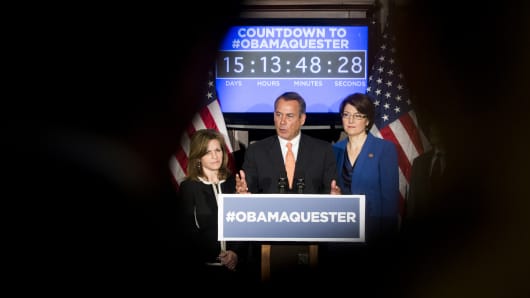
Meanwhile, House Speaker John Boehner labors to remind the country that these reductions — or sequestration — were initially a White House-proposed fix in order to raise the debt ceiling back in 2011.

More From Fiscal Times: Sequestration: What in the World is it?
Chris Maddaloni | CQ Roll Call Group | Getty Images

"Right up until the last minute, both the president and the Republicans are going to try to make the most hay out of the issue and make the other guy look bad," said Steve Ellis, vice president of Taxpayers for Common Sense. "It's almost like they would rather have the issue than the solution. And I think it's unfortunate for taxpayers, I think it's unfortunate for the government, but this is the reality of politics today."

A few key facts have emerged over the past several days amid the blame game. First, there is a growing consensus that sequestered cuts totaling as much as $1.2 trillion over the next decade won't lower the national debt. The main drivers of the deficit – Medicare, Medicaid and other entitlement programs—have been exempted from cuts. The second is that while the sequester may use a feckless "meat cleaver" approach to trim spending on defense and many domestic programs it's not enough to put the whole economy through a meat grinder.

"Is it a calamity? No," said Douglas Holtz-Eakin, an economist who has advised Republican presidential campaigns and now serves as president of the American Action Forum. "It's going to look more like the rounding error in GDP. I think there is a lot more noise than light being shed on the sequester."

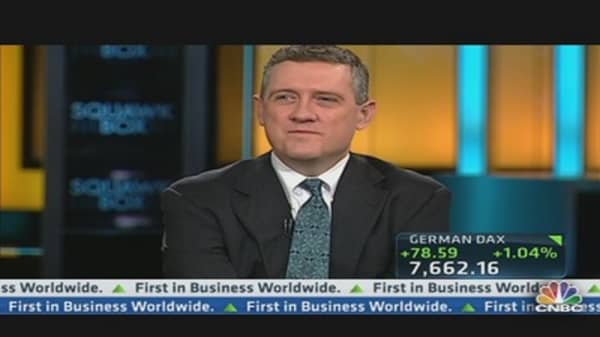
Fed's Bullard: People Won't be Shocked by Sequester
James Bullard, president of St. Louis Federal Reserve Bank, says the sequester would only have a minor impact on 2013 growth.

Here are the five things you need to know:

No Recession Coming – For all the fear-mongering about hundreds of thousands of furloughs and reduced services, government officials aren't hyping the possibility of a recession. In a $16.4 trillion economy, the sequester just isn't big enough.

Macroeconomic Advisers garnered attention this week for predicting that the measure would block the creation of 700,000 jobs by the end of 2014. The sequester lops half a percentage point off from growth, but the Gross Domestic Product would still chug along at a 2 percent pace—not too far off the mark in this tepid recovery. "Not catastrophic," the firm concluded.

What really matters, economists note, is the issue Obama and Republicans have largely stayed quiet about—$200 billion in tax increases slated for this year as part of the fiscal cliff deal approved on New Year's Day. Rates ticked up on household incomes above $450,000 and the two-year payroll tax holiday ended, which would likely cause many consumers to open their wallets less often.

Failure to extend the current budget resolution or defaulting on our debt—both possibilities in the months ahead—would be cause for panic.

More From Fiscal Times: How the Sequester Will Affect Consumers and Business

The Cuts Are Really Less than $85 billion — Politicians keep talking about $85 billion in spending cuts. Technically, you should halve that figure because agencies can draw from stockpiles of unused funds from past years. The sequester applies to how much money is authorized, not how much federal agencies actually spend.

"This excess budget authority rolls over from year to year," wrote Bank of America economists Ethan Harris and Joshua Dennerlein in a client note. "These programs can use this excess budget authority to count towards their sequester requirements."

Actual spending cuts would be about $42 billion for the seven months left in this fiscal. Or on an annualized basis, $72 billion for twelve months, according to Bank of America.

Federal Employees Get Screwed — The one warning that echoes across the government is that personnel-heavy agencies can't use accounting tricks to escape the sequester.

Voters hear about longer security lines at airports, which seems somewhat minor compared to hundreds of thousands of civilian Defense Department employees staring down the possibility of a 20 percent salary decrease. "There is no amount of planning that can avoid these damaging impacts," Danny Werfel, controller for the Office of Management and Budget, told a Senate panel last week.

G. William Hoagland, a budget expert with the Bipartisan Policy Center, says : "The real hurt will come particularly for those agencies that are personnel-intensive. That would mean the Food and Drug Administration, the FAA and other transportation-oriented infrastructure programs, the FBI and TSA."

Federal employees get little public sympathy, possibly because unlike the private sector they don't lose their jobs when they furloughed. They're often anonymous targets of voter scorn, so it's logical that politicians would formulate a solution in which they bear the brunt of lower expenditures, rather than the Medicare and Social Security recipients who will fuel deficit-spending in the decades to come.

 Print
"Is it a calamity? No," says one economist. "It's going to look more like the rounding error in GDP. I think there is a lot more noise than light being shed on the sequester."
  Price   Change %Change
BAC ---

   
Comments


More Comments


Add Comments


Your Comments (Up to 1100 characters):

Remaining characters

Your comments have not been posted yet.

Please review your submission to make sure you are comfortable with your entry.

Your Comments:


Featured