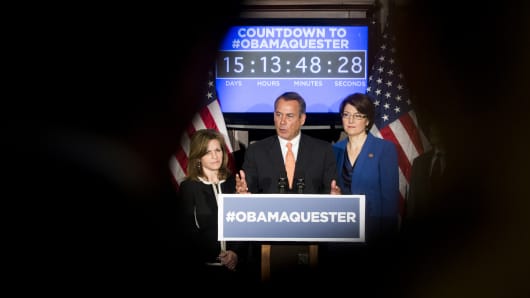
With the automatic spending cuts kicking in next week, it's tough to separate fact from bluster. Both the Obama administration and congressional Republicans chose this week to go with finger-pointing, a subtle acknowledgement that their differences on taxing and spending won't be bridged by more negotiating.
President Obama and his team warn of government services getting even worse if the $85 billion of across the board cuts in fiscal 2013 are allowed to kick in next Friday — cars stuck idling at under-staffed border posts, furloughed bureaucrats, fewer police and firefighters, thousands of hungry children kicked off government nutrition programs.
Meanwhile, House Speaker John Boehner labors to remind the country that these reductions — or sequestration — were initially a White House-proposed fix in order to raise the debt ceiling back in 2011.
More From Fiscal Times: Sequestration: What in the World is it?