Go Symbol Lookup
Loading...

How Should Investors Play the Italian Panic?

 Text Size  
Published: Wednesday, 27 Feb 2013 | 2:47 AM ET
By: Katie Holliday I Writer CNBC Asia
Play the Italy Panic Through Natural Gas: Pro
Tom Essaye, President of U.S. commodities trading firm Kinsale Trading, discusses why he thinks the fallout from the Italian election saga will take its toll on commodities.

Over the past week, risk appetite has soured following a political stalemate in Rome and anxiety over the U.S. "sequester" spending cuts that kick in on March 1, but strategists told CNBC that there is a way to trade this panic.

(Read More: Italy 'Hung, Drawn and Quartered')

They point to a range of assets that are not solely influenced by risk sentiment – these include natural gas stocks, precious metals and shorting instruments.

Tom Essaye, president of U.S. commodities trading firm Kinsale Trading, for example, is looking at stocks exposed to the natural gas market, because he sees no correlation between natural gas and global risk sentiment.

"There are bullish tendencies in natural gas as it is uncorrelated to all the madness occurring in Europe and across the globe. There is money to be made there, specifically in the tanker stocks and the gathering and processing stocks," he said.

(Watch More: Trading US Natural Gas in 2013)

Italian elections left no party in the majority, raising fears Italy's much needed economic reforms will flounder. This development knocked global markets off their 2013 rally, with both the S&P 500 and the Nikkei falling about 2 percent on news of the Italian stalemate earlier in the week.

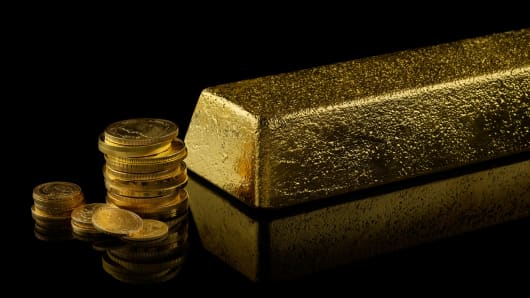
Essaye added that as the euro zone crisis accelerates again some commodities will weaken significantly. "This will specifically affect industrial commodities, such as copper, oil and base metals and you will see a rally in precious metals at the same time," he said.

"This almost makes me want to go into something uncorrelated like natural gas. We've seen inventories here (U.S.) come down in recent weeks and as we've had a cold snap demand for power generation is up," he said.
Source: World Gold Council

Ric Spooner, chief market analyst at Australian stockbroker CMC Markets, has seen increased demand for a range of "uncorrelated" assets since risk sentiment began to turn last week after the minutes of U.S. Federal Reserve's January meeting hinted quantitative easing (QE) could be coming to an end. But Chairman Ben Bernanke has since quelled those fears in a speech to the U.S. Senate on Tuesday, reiterating his commitment to easing.

(Read More: Fed's Bernanke Stays the Course)

"Over the past week we have seen increased demand for short-selling on risk-on products, such as CFDs over major indices, precious metals, and for shorting the euro," he said.

The CFDs (contracts for difference) are trading instruments which allow investors to go long or short on a variety of asset classes.

Spooner said investors have been buying CFDs shorting major indices, such as the S&P 500, the German DAX and the Hang Seng, in a bid to protect themselves against further falls.

(Read More: Just Like That, Safe Havens Are Back in Favor)

He also saw increased appetite for both gold and silver, which he said was due both to relief over the Fed's continuation of easing and as a safe haven move. Spooner added that people were shorting the euro versus the U.S. dollar on concerns that the euro zone crisis will resurface. The euro has fallen 4.3 percent against the dollar since February 1.

 Print
Over the past week, risk appetite has soured following a political stalemate in Rome and anxiety over the U.S. "sequester" spending cuts that kick in on March 1, but strategists told CNBC that there is a way to trade this panic.
  Price   Change %Change
S&P 500 ---
NIKKEI ---

   
Comments


More Comments


Add Comments


Your Comments (Up to 1100 characters):

Remaining characters

Your comments have not been posted yet.

Please review your submission to make sure you are comfortable with your entry.

Your Comments:


Featured

Editor's Picks

  • The Australian dollar has had a swift, hard fall and now Goldman Sachs is predicting it could fall to as low as $0.80.

  • More fund managers are growing increasingly bearish on the outlook for China, believing "a hard landing" for the economy and a "commodity collapse" are currently the biggest tail risks facing markets, a monthly survey by Bank of America/Merrill Lynch show

  • Japan surpassed expectations in the first quarter, expanding at its fastest pace in a year, but an important pillar of growth was missing.

Asia Video

  • Nitin Padmanabhan, Analyst, IT & Telecom, India at Espirito Santo Securities tells us how to play Wipro and Tech Mahindra, as well as the Indian tech market

  • Roger Nightingale, Economist at RDN Associates says the global economy is in a deceleration phase but markets are being supported by the liquidity. Richard Martin, Managing Director of IMA Asia joins in the conversation.

  • Bill Smead, CEO and CIO of Smead Capital Management gives his perspective on the upcoming JPMorgan vote to keep Jamie Dimon as both CEO and Chairman.