

Even the priciest metro areas aren’t immune to rising foreclosure rates.
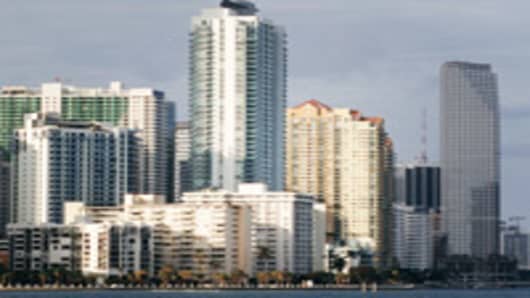
Miami Skyline
During the first quarter, foreclosures have jumped sharply across the nation’s top urban markets, according to a PropertyShark.com report released to CNBC.
In Miami, foreclosures are up nearly 31%, in Los Angeles 24%, and in New York City, up 56%, the website said. Properties in the borough of Queens accounted for the bulk of the New York foreclosures, jumping 91% alone.
Miami experienced the highest quarterly foreclosure rate per household. In Miami-Dade County, there were 987 residential auctions in the first quarter, which translates into 127 foreclosures per 1,000 households. Miami typically has foreclosure rates higher than the national average because it attracts investors that buy into properties before they’re developed with hopes of flipping them later at a profit.
Now that prices have peaked in urban markets, investors are left holding properties that they need to unload in a soft housing market. In addition to investment speculators, many subprime borrowers have overextended themselves with creative financing or little money down on homes they couldn't really afford.
Foreclosures occur when an owner is behind in mortgage payments and the lender initiates foreclosure action on the property. That process can take 12 to 18 months, so foreclosures are a lagging indicator of the broader housing market.
But California -- where foreclosures take only about six months from payment default to auction -- may mirror national trends. While it may not be surprising that Los Angeles’ low-income areas, including Lancaster, Palmdale and Long Beach, are the most affected, PropertyShark's chief executive officer, Ryan Slack, said he believes a coming rise in foreclosures across the nation will be severe.
Los Angeles “with its mix of urban and predominantly suburban neighborhoods, its large mix of wealthy and less wealthy areas, is definitely an indicator of trends elsewhere,” Ryan Slack, chief executive officer of PropertyShark, told CNBC.
Slack said the areas most vulnerable to rising foreclosure rates are those that have experienced the most price appreciation like the coastal urban markets.

