

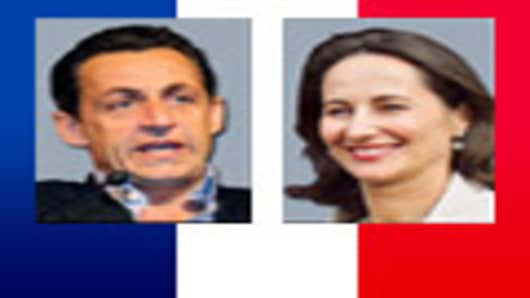
It’s probably the worst-kept secret in Paris. Most of the French CEOs will vote for Nicolas Sarkozy on Sunday. But still it has to remain a secret. You never know, should Ségolène Royal become the next president, it could hurt your business and damage your relationship with the government.
Some still remember the 1995 experience. Prime Minister Edouard Balladur was leading the race, well before Jacques Chirac, and was largely expected to be the next French president. We all know what happened next. Chirac was elected and some bitterly regretted their public support of Balladur.
But the main reason why CEOs and analysts are so reluctant to go public with their political preferences has more to do with a cultural thing. French people don’t normally share their political opinions, as they never disclose their salary. It’s actually rude to ask someone how much he or she earns, and if you’re very well paid, telling people about it makes you a “show off” at best.
Of course we do speak about politics, money, and religion. But for well-educated citizens, it has to remain private, or anonymous, like in a recent study made by the Ifop survey company. Anonymously, the result is clear: a large majority of chief executives will support Sarkozy.
So if you travel to France these days, don’t expect your business contacts to tell you they’re Sarkozysts, even if Sarkozy himself, encouraged people “not to apologize for voting on the right wing”. It goes without saying, if you’re in business, you’re with Sarkozy. Less taxes, more flexibility, and some limits to the right to strike. That makes sense.
But Nicolas Sarkozy is interventionist. With Alstom, with Airbus, and with the European Central Bank, he wants to interfere, to rule, to control. That’s why some CEOs -- still anonymously -- say that they will vote for him, only because there is no liberal candidate in France. And this is also why 27 economists decided to support Ségolène Royal, arguing that she cannot be worse than Sarkozy, that she is a conceivable alternative. They made it public, which is something exceptional in that country.
In their fight for Ségolène Royal, they joined Madame Geneviève de Fontenay, the head of the Miss France committee, who recently expressed publicly her support for the socialist candidate. Given her well-educated profile, this is something very surprising. But with such a name, she could only be a Royalist.