

Here's the quick and dirty on what yesterday's ruling by the U.S. Supreme Court on Leegin v. PSKS means for retail:
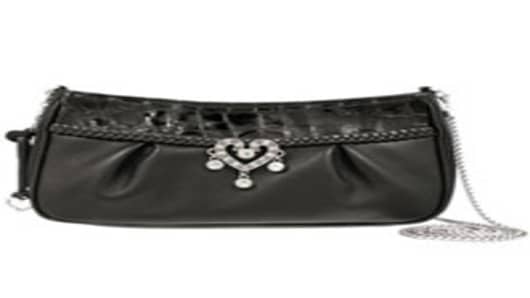
brightonretail.com
Crystal Heart Pouch $135
The case of Leegin v. PSKS came to the docket of the Supreme Court after a dispute over the sale prices of designer handbags made by Brighton/Leegin of City of Industry, California. Brighton/Leegin required a Lewisville, Texas, boutique, Kay's Kloset, to agree in writing not to sell its products below a certain price. Kay's Kloset did sell them below the suggested price level and sued Brighton/Leegin in 2002 after it was dropped as a dealer for violating the agreement.
Thursday, the Supreme Court struck down the ban on minimum pricing agreements between manufacturers and retailers. That now means that manufacturers of branded product will have more power in setting the minimum prices of those items. They'll also have greater control over how those products are presented to the public in stores. There is no consensus view on just what this means for retailers across the board--the impact seems to be case by case.
Publications like Women's Wear Daily have suggested that this ruling could be a "tremor" that will have serious effects on the relationship between retailers and manufacturers. In contrast, Mallory B. Duncan, general counsel of the National Retail Federation, says the court "put a light thumb on the scale" to benefit some retailers but not all. Duncan says right now the overall effect is slight and the true impact won't be seen for years. He expects to see a series of lawsuits sparking dialogue within the industry that will eventually establish a unified standard for retail.
Who does it help?
Manufacturers now have a little more control when it comes to setting the price and controlling the presentation of their products within stores. The National Association of Manufacturers has been quick to point out though that this doesn't carte blanche legalize price maintenance. Instead this ruling opens the door to a ton of litigation by manufacturers who will now have to prove that price-fixing on their individual products (name brands as broad as Apple, Ralph Lauren, Nike, etc.) makes for a more competitive environment for sales. In other words, the case needs to be made by the manufacturer that allowing the consumer to comparison shop will actually create an anti-competitive environment. Retailers who sell generic, non-branded products will largely be unaffected by the ruling.
Who does it hurt?
True, small businesses will have an even harder time keeping up with Big Box stores when it comes to competition in the discount market. However, small stores that sell high-end brand names may not be negatively impacted as the manufacturers who produce these branded items will want to keep their high-end products on shelves though they may be choosier about the channels of distribution and level of service provided in store.
Consumers may have a more difficult time getting discounts on branded goods. According to dissenting opinion by Justice Stephen Breyer: "The only safe predictions to make about today's decision are that it will likely raise the price of goods at retail." This isn't necessarily the case but could potentially become true IF manufacturers do win a majority of future cases in court that establish a price floor under certain products. At this point, it is up to the lawyers to sort out.
There are many potential impacts that we'll have to see play out. The big retail names out there (Wal-Mart , Target , etc.) are unlikely to feel any real negative impact by the ruling because they sell a good deal of generic, non-branded product. Another chip in their favor: the individual negotiation power they hold with their suppliers due to their massive size. It will be hard for a manufacturer to squeeze a retailer of Wal-Mart's size in order to establish a price floor. Smaller retailers may not have this bargaining power with their manufacturers. Mid-size discount retailers like Burlington Coat Factory (private) has vocally lobbied against this ruling.
So, after all is said and done, here are the questions that we'll see answered over the next months and years as this regulation is enforced:
1) Will this ruling merely be a tremor or cause real cracks in the relationship between retailers, manufacturers and consumers?"
2) How will this affect inventory management by retailers?
3) Will this encourage the practice of forced buybacks by manufacturers from retailers?
4) Will the suppliers be forced to take a hit to their bottom line to repurchase those items that didn't sell at the price points that they set for the retailer?
5) Will this set a premium for customer service and ultimately improve the retail space environment as manufacturers become choosier about the channels of distribution that they sell through?
Okay, what do you think the impact will be? Write to me and let me know what you think's going to happen in retail from this ruling. I'd like to hear your opinions. Write to me at retaildetail@cnbc.com and I'll post the best ones.
Questions? Comments? retaildetail@cnbc.com