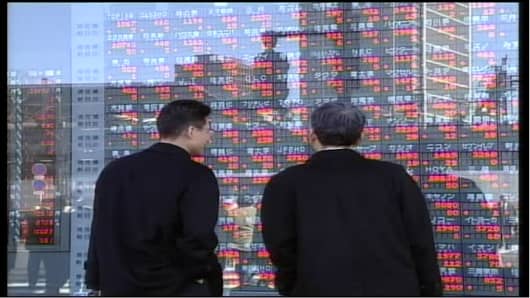
Japan's Nikkei 225 Average finished over 1 percent higher, driven by Nissan Motor after it posted surprisingly strong results, while banks jumped as investors bet the worst is over for the sector and expected
further rate cuts by the Fed will help loosen up credit markets. A string of blue-chip stocks such as Canon and Honda Motor also helped buoy the market on profitability hopes, sending Tokyo stocks to their highest in more than a week.
South Korea's KOSPI gained 1.7 percent to set a new record, led by exporters such as Samsung Electronics on expectations of lower U.S. interest rates, while energy stocks gained as oil prices rallied to new heights. Kookmin Bank, South Korea's top lender, rose ahead of its quarterly results announcement. After the bell, the firm posted a mild rise in quarterly profit after selling a stake in an insurance company.
Australian stocks gained 1.4 percent to a record close as investors chased nickel miners after Anglo-Swiss miner Xstrata launched a A$3.1 billion ($2.8 billion) bid for Jubilee Mines.Record oil and gold prices broadly helped resource stocks, but companies with large export earnings struggled due to continued strong gains in the Australian dollar.
Hong Kong's Hang Seng Index shot up to close 3.9 percent higher, breezing past the 31,000 mark for the first time as expectations of a U.S. rate cut propelled shares in the city's property developers to new all-time highs. China Construction Bank jumped on better-than-expected earnings while Bank of Communications surged on news HSBC Holdings was raising its stake in the mainland lender.
Singapore's Straits Times Index finished 1.3 percent higher, but gains were capped as property counters such as City Developments fell after the government said real estate developers could no longer let home buyers delay payments on the bulk of their property purchases.
Banks led the Shanghai Composite Index higher after several large lenders reported strong third-quarter earnings, and on hopes that China would soon launch stock index futures. However, most stocks dropped and turnover remained very thin, showing many investors remained gloomy about the market's near-term prospects after a sharp pull-back in the past two weeks.