

Minneapolis Federal Reserve Bank President Gary Stern said on Monday he expected the U.S. housing market to weaken further because of a large pool of unsold homes.
AP
But employment and incomes were still rising, Stern said, and that would underpin consumption.
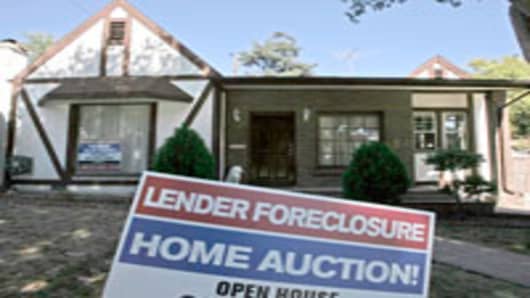
"The adjustment in the housing market has still some way to go. The reason I say that is because of the huge inventory of unsold homes," Stern told reporters in Singapore.
"I would expect new home building to remain quite constrained. It is also true foreclosures will go up rather than down over the next several quarters," he said on the sidelines of a risk conference in Singapore.
Earlier on Monday, he told the conference that the absence of pre-emptive action on interest rates by the Fed was not behind the subprime mortgage crisis, and he warned against rushing to push through reforms during the credit turmoil.
Delinquencies May Rise
Stern said that financial markets were braced for a rise in delinquencies and would not be surprised by such data.
While it was likely there would be a reduction in new home building in the United States for a while, the growth numbers so far showed the economy was resilient to the credit market turbulence, he said.
"At least so far, other aspects of the economy have more than outweighed the housing sector. Housing is only 5-6 percent of the economy," he said.
The U.S. economy expanded at a 3.9 percent annual pace in the July-September quarter, following growth of 3.8 percent in the second quarter.
Responding to the credit crisis, the Federal Reserve has cut its fed funds target twice by a total of 75 basis points to 4.5 percent, and market participants are increasingly speculating there will be another cut when the Fed meets on Dec. 11.
Stern declined to comment on the possibility of another rate cut but said the Fed remained flexible on policy. "We have to see how things evolve," he said.
Overall inflation in the United States was modest, despite a rise in fuel and food prices, he said.