Money & Politics
- Zero China Growth Is ‘Probable’: Gordon Chang
- With Greece Nearing Euro Exit, Is Cash King?
- Euro Zone Battle Hinges On Greece’s Banks: Steil
- Will Congress Forge Budget Deal, Avoid ‘Fiscal Cliff’?
- Bob Lutz: Auto Bailout Was ‘Right Thing to Do’
- Will European Woes Trigger QE3, Death of Euro?
- Battle Over Congressional Budget Heats Up
- Extend the Bush Tax Cuts Now
- Sen. Coburn: There Will Be a Budget Deal
- Paul Ryan Blames Democrats for Debt Woes
SHOW TIMES
Weeknights 7p ET
CNBC Asia:
Saturday 07:00 SIN/HK
RSS FEED
MOST SHARED
- Spain to Inject 19 Billion Euros into Bankia
- Fresh Fears as EU Finalises Reform Plans
- Beijing Faces Brussels Action on Telecoms Aid
- Zero China Growth Is ‘Probable’: Gordon Chang
- Citigroup Lost $20 Million on Facebook IPO Trades
- China Growth Risks Signal Need for Fiscal Action
- Greek Exit Could Trigger 50% Fall in Euro Stocks: Analyst
- What Would Greek Exit Mean for the US Economy?
- GM Discloses $600,000 Contract With Ad Agency Tied to CFO's Wife
- 5 High-Yield Stocks Ready to Boost Dividends
CONTACT US
We want to hear from you!
E-mail:
Home Price Reversion to Trend
Anchor
People are wondering how far home prices have to fall before hitting bottom, or some sustainable level. One way is to look at what a price reversion to trend would entail.
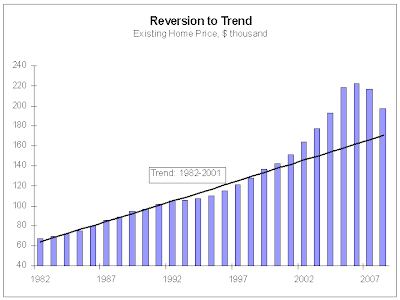
From 1982 to 2001, median existing home prices grew at a 4 percent per year trend rate. We select 2001 as a cut-off, because the Fed dropped the funds rate to 1.75 percent and home sales took off in the subsequent years.
Home prices also surged; until they peaked in 2006, home prices grew at an 8 percent per year pace, double the 1982-2001 trend pace. Home prices have started to correct, with a 2 ½ percent drop in 2007 and 7 percent drop so far this year.
Comparing actual home prices with what the 1982-2001 trend projected, we see that prices in 2006 were almost 40 percent above trend. Current prices are still 16 percent above the trend projection.
If prices are to revert to the trend by next year, they still need to fall another 12 percent from current levels. Reversion to the trend by 2010 would require a 10 percent decline from current levels.
Obviously, prices still have a way to go. However, this also means that homes are becoming more affordable. The home affordability index is now at the highest level since early-2004. (Thanks to Mark Perry at the Carpe Diem blogsite for highlighting this).
Falling home prices aren’t pleasant, but they are part of the market’s self-correction process. It’s also worth noting that even if prices revert to the trend growth rate, a home purchased more than five years ago would still have appreciated in value.
- The Nasdaq has suffered the most from the EU crisis showing there's risk in the usual tech stocks.
- Targeting more Millennials is just one of the items brewing for consumers in the world of spirits.
- It seems many people may need a reminder of how NOT to act on a plane. Here are a few tips.
- Here are some very unusual roadside stops along American highways that might peek your interest.
- How three generations of Americans are dealing with the finances of retirement.


