

The U.S. economy is in a recession and stimulus from a government tax rebate later this quarter will only temporarily stem a fall in consumer spending, a Merrill Lynch economist said on Wednesday.
AP
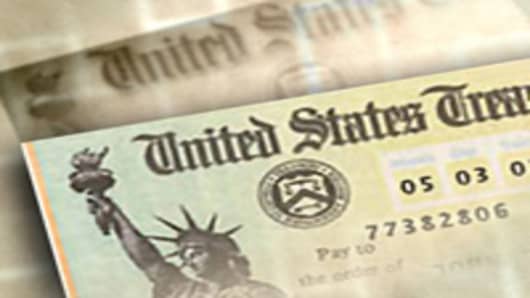
Tax Refund Check
U.S. households will get tax rebates next month as part of a $152 billion stimulus package passed earlier this year, aimed at propping up an economy hit by the subprime mortgage crisis, losses at top banks and a credit crunch.
"I still maintain the business cycle is bigger than the government," Merrill's North American economist David Rosenberg said at a client conference in Singapore.
He said the world's largest economy was already in recession as consumer spending and confidence had fallen and jobs losses were rising, with the number of hours worked having fallen sharply.
Describing housing as "the quintessential leading indicator", Rosenberg, a long-time bear on the U.S. economy, said he expected home prices to fall another 15-20 percent before stabilizing.
He also predicted inflation in the United States would slow as consumer spending weakens, and that the Federal Reserve would be forced to cut rates further to deal with the recession.
"No asset class security is priced today for a recession scenario," Rosenberg said, which is why he was bullish on U.S. Treasuries but bearish on stocks.