

The film and television industries are still struggling to find a way to make downloadable content work (and do so profitably), but the video game industry is making a series of significant strides that could affect the bottom line of traditional retailers—and video game publishers.
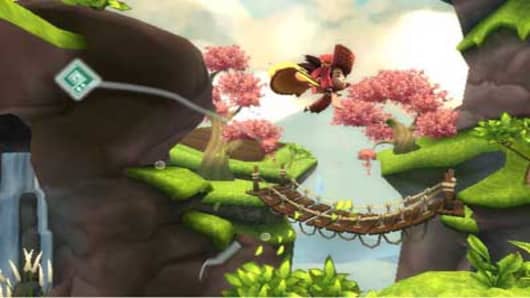
Downloadable games currently contribute only a small amount to the industry’s overall revenue, but they're slowly gaining acceptance. What’s especially intriguing about them, though, is that they allow smaller game makers to completely bypass the traditional publishing system.
Nintendo is the latest company to offer the downloadable alternative. Its recently introduced WiiWare system lets Wii owners download games from independent developers who've been bypassed or overlooked by large publishers.
Burgeoning game designers also have a direct inroad to the Xbox 360, via the upcoming Xbox Live Community Games program. Two years ago, Microsoft gave anyone who was interested the tools to begin creating titles. Later this year, it will let them distribute their work through the Xbox Live Marketplace.
Both programs amount to baby steps for the industry, but they're steps that could have significant ramifications. By allowing direct distribution of games, Nintendo and Microsoft are effectively taking away some of the publishers' power. Rather than having to pitch a video game idea and hope for funding, developers and skilled hobbyists can now create the game they want on the side—then let the market dictate whether their idea had merit.
It is, essentially, the YouTube model, only on a larger and potentially more profitable scale. Creators set the price for their games (typically under $20), with Microsoft and Nintendo getting a cut. Developers retain the rights to their creation, though—meaning if the game is a success, they have better leverage to strike a more lucrative deal with a big publisher in the future.
While the two console initiatives present opportunities for small companies, big publishers are also able to release titles via the programs—giving them an outlet for smaller or experimental games, with significantly reduced development costs. Square Enix (makers of the larger "Final Fantasy" series) and Gameloft are among the initial lineup of WiiWare game makers.
Nintendo and Microsoft are the most visible companies endorsing direct game distribution, but it’s actually privately held Valve Software, creator of the "Half-Life" franchise, that’s leading the pack.
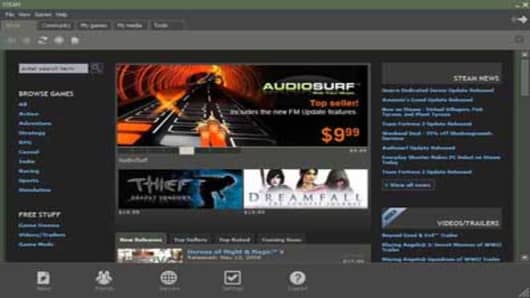
Steam, the company’s digital content delivery system that was introduced in 2004, currently boasts over 250 games from both independent developers and major publishers. The latter group of companies includes THQ, Activision and Take Two Interactive, which not only uses Steam as an additional distribution channel for current games, but also as a way to breathe second life into older titles in their catalog.
Should Retailers Be Scared?
In the short term, publishers and retailers don't have a lot to fear from these digital distribution systems. Traditional retailers still account for the lion's share of sales.
Moreover, the most high-profile attempt to break away from the publisher model did not fare well. In 2006, developer Ritual Entertainment released "SiN Episodes: Emergence," the first in a planned nine-part episodic series. Based on the company’s cult 1998 hit, this action game seemed to have all the cards stacked in its favor: a low price point, a built-in audience and the full support of Valve, which was eager to showcase Steam as an alternative to publishers.
The reviews were not good, however. Neither were sales. Within a year, Ritual sold itself to a casual game maker and abandoned the series.
The audience for PC action games like "SiN Episodes" is still something of a niche. Game consoles such as the Wii and Xbox 360 have not only larger customer bases, but also a more diverse one—especially in the case of Nintendo, which has brought in a slew of non-traditional gamers with the Wii. Meanwhile, don't be surprised to see Sony introduce something similar for the PlayStation 3 if its competitors start racking up hits.
That makes the long-term view of downloadable game services more intriguing. Digital delivery of all forms of entertainment is widely considered to be a foregone conclusion. Only the timeframe is in question. Not only will publishers have to learn to adapt, but game retailers such as Gamestop will have to figure out how to compete directly with companies that are also clients.
For now, all eyes are on Microsoft and Nintendo—their experiments in changing how games are developed and distributed may well decide the future of online content delivery for the video game industry.