|
CNBC'S MOST SHARED
- 'We're in the Middle of a Crash': Black Swan
- A Goldman Trading Scandal?
- The Rising Mountain of Debt May Be the Next Crisis
- SEC May Reinstate Rules for Short-Selling Stocks
- Latvian Banker Taking Souls as Collateral
- The Worst Expected 2010 State Budget Gaps
- Cuddle Parties Heat Up
- Alaska Governor Sarah Palin Will Resign
- Best Cities For New Grads
- Alcoa to Post Loss — What Does This Mean?
- A Goldman Trading Scandal?
- Top Videos: From the Black Swan to the Bond King

- Obama Plan Would Trim Back Financial Powerhouses
- Biden: 'We Misread How Bad The Economy Was'
- FedEx Sees Signs of a Turnaround: Report
- Property Tax Appeals Take Toll on Governments
- Chrysler Names Remaining Directors to New Board
- Car Dealer Determined To Fight Chrysler Over Franchise
- Fireworks At Pharma's Market
- Value of Warren Buffett's Annual Gift to Gates Foundation Falls Along With Berkshire's Stock
- Michael Jackson: The Music And The Money
- Five Stock Picks for This Market
- Realities of the New Obama Refis
- Weak Dollar Means Gold at $1,040: Strategist
- Court Ruling Could Mean Trouble for TiVo
- Lance, Please Back Out Of Tour
- TeleMedicine Gets An Apple App Store Facelift
![]() |
AP |
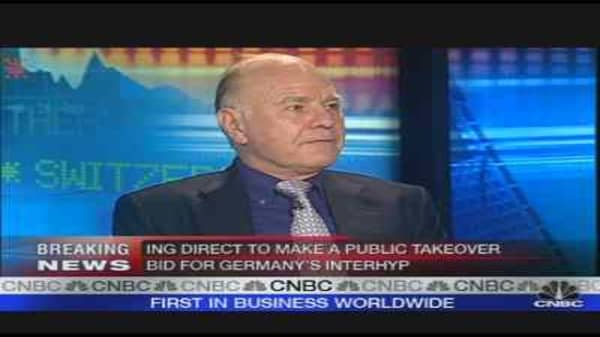
The credit crunch is far from over and is likely to hit sectors other than housing, Marc Faber, Editor and Publisher of “The Gloom, Boom & Doom Report”, told "Squawk Box Europe."
Consumers will cut spending because of the high oil and energy prices, and all that the recent rally in stocks has shown is that investors think shares offer a better cushion against inflation than bonds, Faber added.
"I personally think we are just starting the credit crunch and it is going to be worse," he said. "I think the economy really stinks and the next sector to be hit, in America and elsewhere, is retail."
The strength of oil and energy stocks has offset some of the current market weakness, and many people believe we are moving into an environment like the one in the 1970s, with high inflation, Faber added.
But the oil price "is not going to go up another 10 times," unless the Federal Reserve prints money and causes hyperinflation; "but then we should worry about other things, we should worry about civil unrest," he said.
China and India, which for a long time have kept world prices down because of their cheap workforce, are on their way for a change.
"Because they cannot survive unless they push up manufacturing prices, they are an inflationary force on the global economy," Faber said.
However, global monetary conditions are likely to tighten as the shrinking U.S. current account deficit deprives the world of liquidity, he added.


