

Saudi Arabia, the world’s biggest oil exporter, is planning to increase its output next month by about a half-million barrels a day, according to analysts and oil traders who have been briefed by Saudi officials.
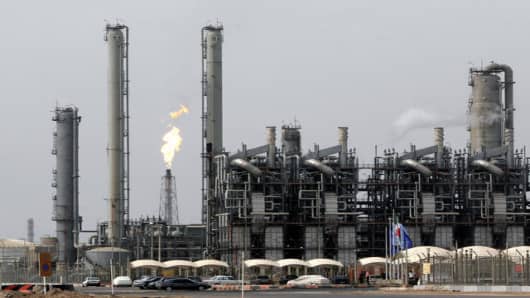
Oil Refinery
The increase could bring Saudi output to a production level of 10 million barrels a day, which, if sustained, would be the kingdom’s highest ever. The move was seen as a sign that the Saudis are becoming increasingly nervous about both the political and economic effect of high oil prices. In recent weeks, soaring fuel costs have incited demonstrations and protests from Italy to Indonesia.
Saudi Arabia is currently pumping 9.45 million barrels a day, which is an increase of about 300,000 barrels from last month.
While they are reaping record profits, the Saudis are concerned that today’s record prices might eventually damp economic growth and lead to lower oil demand, as is already happening in the United States and other developed countries. The current prices are also making alternative fuels more viable, threatening the long-term prospects of the oil-based economy.
President Bush visited Saudi Arabia twice this year, pleading with King Abdullah to step up production. While the Saudis resisted the calls then, arguing that the markets were well supplied, they seem to have since concluded that they needed to disrupt the momentum that has been building in commodity markets, sending prices higher.
The Saudi plans were disclosed in interviews with several oil traders and analysts who said that Saudi oil officials had privately conveyed their production plans recently to some traders and companies in the United States. The analysts declined to be identified so as not to be cut off from future information from the Saudis.
Last week, King Abdullah also took the unprecedented step of arranging on short notice a major gathering of oil producers and consumers to address the causes of the price rally. The meeting will be held on June 22 in the Red Sea town of Jeddah.
Oil prices have gained 40 percent this year, rising to nearly $140 a barrel in recent days and driving gasoline costs above $4 a gallon. Some analysts have predicted that prices could reach $200 a barrel this year as oil consumption continues to rise rapidly while supplies lag.
The growing volatility of the markets, including a record one-day gain of $10.75 a barrel last week, has persuaded the Saudis that they need to step in, analysts said.
Tony Fratto, a White House spokesman, said, “We would welcome any and all increases in oil production, including from Saudi Arabia.”
But the measure carries some risks to the kingdom and is not guaranteed to bring down prices, analysts said. Some investors doubt that Saudi Arabia has the capacity to increase its production beyond its current levels.
“This clearly represents the biggest test for them,” said John Kilduff, a senior vice president at the brokerage firm MF Global, who said the move could backfire if investors failed to respond to the extra Saudi supplies. No other producer has the capacity to quickly expand production.
Oil prices fell on Friday, slipping $1.88 to settle at $134.86 a barrel on the New York Mercantile Exchange, after reports of the prospective Saudi increase trickled into the market.
Ibrahim al-Muhanna, an adviser at the Saudi petroleum ministry, declined to comment on the production increase but said that Saudi Arabia was uncomfortable with oil prices. “Our goal is to bring back stability to the oil market,” he said.
Consumers are complaining that rising fuel prices are imposing a growing toll on their economies, and contributing to higher food costs. The Australian prime minister, Kevin Rudd, said this month that it was time “to apply the blowtorch to the OPEC organization.”