

The Treasury and the Federal Reserve should not bail out Fannie Mae and Freddie Mac as this would increase the already gaping U.S. public debt, investor Jim Rogers, CEO of Rogers Holdings, told "Worldwide Exchange."
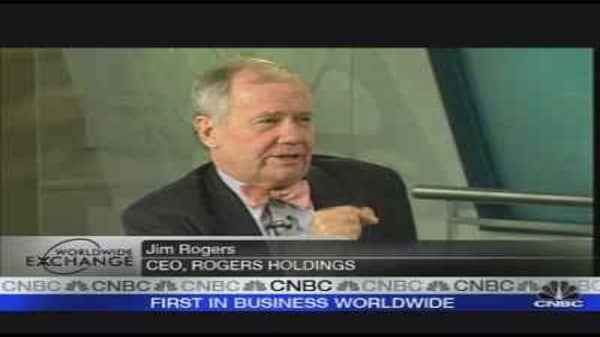
Asked if his remarks could be interpreted as trying to talk down the stock of the two companies, which have been plummeting recently, he said: "I've been short Fannie Mae since I came here three years ago or four years ago. This is bad for America, who cares if I make some money...I'm short lots of banks."
The Treasury Department and the Federal Reserve on Sunday offered massive aid to bolster confidence in Fannie Mae and Freddie Mac and head off a potential financial market meltdown, as the two finance around $5 trillion, or about half, of U.S. home loans. But investors' enthusiasm for the measures was short-lived.
"In two years or three years, when six or eight other people are failing, America won't have any more bullets left," Rogers said, adding that Sunday's move increased the burden of public debt and did not solve the root cause of the crisis. "The patient has cancer, Band Aids won't help."
Letting the two fail would throw the country in recession but would ensure that the system is cleansed, he added. "It would cause problems in the economy but we've got problems in the economy anyway."
Rogers said he was not investing in oil currently because the price was too high, but that new reserves have to be discovered quickly for the prices to come down.
He also said he was investing in airlines, whose stocks have recently been hammered by fears the fuel price would cut into their profits.
"I am buying airlines. If you fly a lot, you'll see that you can't get a seat, the rates are going higher. The capacity is going down and the demand is still there," Rogers said.

