Skip navigation


Current DateTime: 07:13:34 14 Nov 2009
LinksList Documentid: 33482595

Current DateTime: 07:13:36 14 Nov 2009
LinksList Documentid: 24355697

FEATURED QUIZZES


Current DateTime: 07:13:36 14 Nov 2009
LinksList Documentid: 33793611
  • The Billionaire BFF's

      Philanthropists. Bridge partners. Hockey players. Which responses are based on facts from Buffett's and Gates' real lives?

  • The Many Myths of Coca-Cola

      Can you tell which statements are true, and which ones are just rumors?

  • Think You Understand Markets?

      We've selected some questions from the Financial Industry Regulatory Authority's test of investor knowledge. See how you do ...


Current DateTime: 07:13:36 14 Nov 2009
LinksList Documentid: 24890560
  • Winterizing Your Portfolio

      If 2009 was the winter of our discontent, will 2010 be a winter wonderland for investors? A lot depends on the recovery—or lack thereof.

  • Investor's Guide to Real Estate

      Some even say the long-awaited recovery is here. Regardless, buyers and sellers alike can profit from our guide.

  • Alternative Investing

      Stocks and bonds? Sure. But it's a big world out there for investors.

powered by digg
By: Jeff Cox, , Special to CNBC.com | 12 Aug 2008 | 01:14 PM ET
Text Size

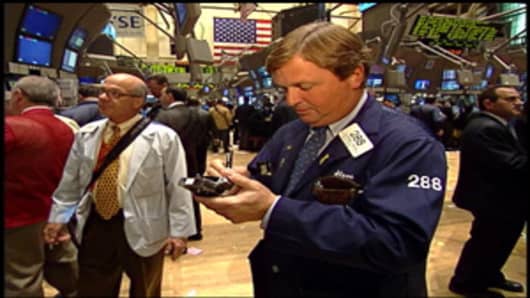
The rapid slide in commodities prices is fueling the recent runup in stocks as Wall Street dumps oil, metals and grains and snaps up beaten-down banks, retailers, airlines and small caps.

But if you're thinking of following the smart money, keep this in mind: Market pros think the switch might be short-lived.

While investment consultants, money managers and hedge funds are looking to capitalize on the sudden strength in equities, many are wondering how long the trade will last once global demand for commodities resumes and pushes up prices again.

"My short-term feeling is it's hot money, it's looking to make money on a trade. It's not commitment money that's looking to stay in," says Michael Kresh, president of M.D. Kresh Financial Services in Islandia, N.Y. "It's not necessarily a sign that the bear market is over. I could see this reverse relatively quickly."

Even while hedge funds, which have been faulted for much of the surge in energy prices, take their money out of oil, there's hardly been a mad dash for the door.

"Clearly there's a major trade going on which I think is more technical than fundamental," says Jordan Kimmel, a hedge fund manager with Magnet Investing in Randolph, N.J. "I think the commodities play is going to come back sooner than most people recognize."

Kimmel sees oil rebounding in the next few months, though not necessarily taking out the record high of $147.27 hit on July 11.

"There's huge demand on the production side that is not going to go away," he says. "I just think that the fundamentals are too strong."

Finding a New Home

The money flowing out of commodities has found a home in a variety of places—in some of the usual suspects like financials and airlines, which depend on lower transportation costs for growth, as well as other locales that get less attention.

Consumer discretionary stocks have attracted attention, as have health care and small companies that are generally relied upon to deliver the market from bear territory.

Video: Stock Picker Says Summer Stock Rally Won't Last—Buy Energy!

Peter Miralles, president of Atlanta Wealth Consultants, says he likes some of the companies on the Russell 2000 small-cap index but says he too is hesitant to call a market bottom and investing more heavily.

"We've been adding money into some of the small caps, some good companies out there," Miralles says. "We want to be there first. However, we're still being cautious. We're not investing all the cash right now. We don't think we're out of the woods yet."

Finding spots to go in such tenuous times poses a pretty big challenge for market players.

"Right now the money's rotating pretty heavily out of the commodities and it's going into areas that have not had much attention as of late," says Richard Sparks, senior analyst at Schaeffer's Investment Research in Cincinnati. "It's certainly much more a stock-picker's market. You don't see the broad money going pretty much everywhere."

Sparks favors some of banks that took a beating during the subprime meltdown, among them Wells Fargo [WFC  Loading...      ()   ] and PNC [PNC  Loading...      ()   ].

"I think those trades make sense for those people who want to dip their toe in and take a little speculative turn here," he says. "I think for the next month or two we're on an upswing."

A Summer Play: Solar Heat, Alt Energy

Miralles says stocks could get another bump when Europeans, who tend to vacation heavily in August, return and try to capitalize on the recent upswing.

"Are they going to feel like they missed a lot of this and do some catch-up and push the market higher?" he said.

Stocks also are likely to get some help from a stronger dollar. A weak greenback boosts commodities, most of which trade in dollars and become more attractive to foreign investors during times of weakness for the American currency.

The full video of Berg's analysis is in video at left, along with commentary from CNBC's Rick Santelli and John Ryding of RDQ Economics.

"It feels like commodities have settled down, and I think stocks as a result could see some more upside," Rich Berg, of Performance Trust Capital Partners, said on CNBC.

For Kimmel, the pullback in oil prices has given him the opportunity to take advantage of some alternative-energy plays that capitalize on Americans' newfound trend towards conservation.

He likes Fuel Systems Solutions [FSYS  Loading...      ()   ], which supplies components used to power alternative fuel vehicles. The stock has gained a stunning 273 percent this year and Kimmel believes it still has room to run.

Also, he is recommending Canadian Solar [CSIQ  Loading...      ()   ], which designs and makes solar equipment and has gained only modestly this year but is well off its 52-week high, suggesting potential to the upside.

Kresh said he is tentatively moving his clients' money out of cash and into equities. He favors small-caps, which have more growth possibilities, he says, than a mega-cap like CNBC-parent General Electric [GE  Loading...      ()   ] or Microsoft [MSFT  Loading...      ()   ]. He is avoiding financials, primarily because he thinks long-term investors could get crushed if the market turns lower after the summer rally.

"Long-term investors don't move money at this rapid a pace. That suggest to me that this is a trade that's going through and not people establishing long-term positions," Kresh says. "Investors need to be cautious, because in this kind of market you can get whipsawed in a hurry."

© 2009 CNBC.com
Tools:
Print EmailAdd This share icon
  • digg share

CNBC HIGHLIGHTS

  • Warren Buffett and Bill Gates spoke to Columbia students, and Buffett made the students a startling offer.
  • Brian L. Roberts
  • For the chief of cable company Comcast, growth has been about making deals – generally very large deals.
  • Some companies may start using insurance to shift carbon risk from their balance sheets to maybe... yours?
  • The president and founder of Genesis Today wants to improve America’s health, and thinks Wal-Mart can help.
  • Switzerland's privacy watchdog is taking legal action to force Google to make changes to its Street View service.
  • A wealthy, distracted Texas driver crashed his million-dollar Bugatti Veyron sports car into a salt marsh, say police.
ADD COMMENTS
Remaining characters


Current DateTime: 01:02:29 14 Nov 2009
LinksList Documentid: 29778428

Current DateTime: 01:02:29 14 Nov 2009
LinksList Documentid: 29779196

Current DateTime: 01:02:29 14 Nov 2009
LinksList Documentid: 29779199

Current DateTime: 01:02:29 14 Nov 2009
LinksList Documentid: 29779198
  Data is a real-time snapshot  *Data is delayed at least 15 minutes
Global Business and Financial News, Stock Quotes, and Market Data and Analysis

© 2009 CNBC, Inc.  All Rights Reserved.
A Division of NBC Universal
Thomson ReutersThomson Reuters