

Investors who think the ban on short selling provides a buying opportunity could get stung by a likely selloff when the rules expire.
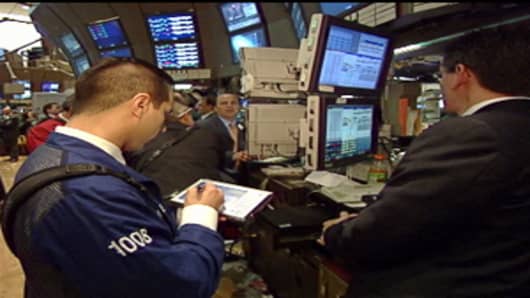
The ban, involving more than 800 stocks that in some cases have only a tangential relationship with the financial selector, is viewed in many quarters as an artificial stimulus likely to wear off once normal trading resumes.
And that could spell bad news for those who see the move as a lasting chance to get back into financials.
"Investors should keep in mind that once these rules are lifted it would allow for additional pent-up (short) selling to continue," says Chip Hanlon, president of Delta Global Advisors in Huntington Beach, Calif. He calls the short-selling restrictions "a terrible idea. It's silly that shorts have driven the market down."
For Investors
- Watch What Buffett Is Doing: Pros
- How to Trade the Proposed Bank Bailout
- Cramer: Sell, Sell, Sell This Market
- Money Market Freeze Needs to Be Fixed
- S&P to Fall Another 40%: Analyst
- Banks After Lehman: Winners and Losers
Financials have brought a wave of volume into the market after rallying last week following the announcement of the ban, which is expected to get extended 30 days beyond its initial Oct. 2 deadline. That concerns analysts who think Wall Street may just be prolonging the agony that will come with the realization that the sector still is basically weak.
"The short-selling rule doesn't change anything about the underlying fundamentals that they're looking to solve," Hanlon adds. "Maybe they think they're providing a psychological boost, but it's really silly to think they're going to fundamentally alter the way the market operates."
Banks staged a very brief rally Wednesday on news that Warren Buffett was taking a $5 billion stake in Goldman Sachs, but it didn't last long as worries about the congressional bailout plan for the nation's banking system took charge.
Optimists about the bailout see it helping financials, but concern persisted that the government plan wouldn't go far enough.
Some worry also that the short-sell rules are giving an artificial boost to bank stock prices that could come back to haunt investors later.
WALL STREET IN CRISIS - A CNBC SPECIAL REPORT
In turn, those holding sizeable portions of the stocks, such as employees of larger institutions like Goldman Sachs and Morgan Stanley can benefit the most from the ban on shorts, while the rest of the market could be set up for trouble.
"They're totally inflating it," says Dave Rovelli, director of US equity trading for Boston-based Canaccord Adams. "Once this ban gets lifted the (bank) stocks are going to get annihilated. Nothing's really changed."
Rovelli is among many traders who believe the short-selling rules were unnecessary. Instead, he thinks that if the uptick rule, which forces shorts to wait for a buyer willing to pay more than the last trade, was put back in place, that would have put a lid on short selling.
The rules also could inspire a false confidence in the overall market, another factor that could bite investors who are taking money off the sidelines to get back into stocks.
Still, other countries around the globe are following the US lead and instituting sharp restrictions or outright bans on shorting. Moreover, there is speculation swirling that the US deadline could be extended until the end of the year, or at least past the presidential election.
But some advisers are telling their clients to wait until the short rules expire before taking aggressive action, on belief that the market will drop after that and set up nicely for bargain hunters.
Options traders fear that the short selling rules are taking equity out of the market and causing even greater risk to options traders who can't short to cover their positions.
"I just see it as kind of putting the brakes on the inevitable," says options trader John Carter, who is president of Trade the Markets. "It can't stop a process. If a company is losing money and it's going to go bankrupt, the short-selling rules aren't going to help it."