

Government bailouts of the financial system will destroy the dollar, euro and sterling because of hyperinflation, Martin Hennecke, senior manager of private clients at Tyche told CNBC. But Todd Everts, president & CEO of Wall Street Global, disagreed.
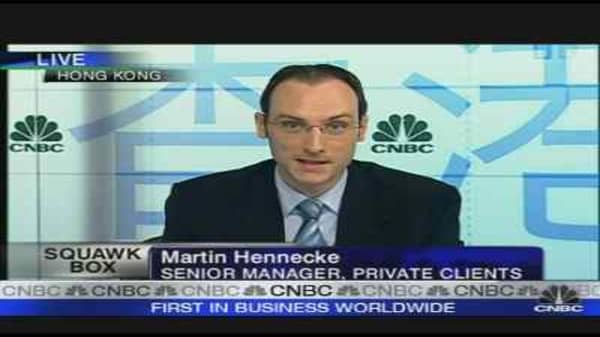
"The privatization of the banks is the first step down the road to hyperinflation," Hennecke said Monday. "Maybe we are not seeing the Zimbabwe-style (hyperinflation), but inflation is a major major risk and investors should look at this very carefully."
Standard and Poor's projected in 2005, well before the current crisis hit, that all the major Western governments would be heading towards default on their sovereign bonds, Hennecke said.
But the dollar's value is set to decrease over time, argued Everts, after hearing Hennecke's case.
(Watch Martin Hennecke's hyperinflation comments above and click here for Todd Everts' reaction >>>).
"The US consumer is not going to be able to drive the world economies as we've seen in the last several generations," Everts said, adding that a worsening trade deficit would help to ease inflation.
"I don't think we're going to get hyperinflation to the extent that we've seen in falling economies like we saw several years ago in Argentina, Brazil and what's happening right now in Iceland," Everts said.
Hennecke said the price of gold would continue to surge as investors swapped out of cash.
Everts agreed that cash was not necessarily the safest place to invest: "You can't just go to cash, What is cash? Cash is a several trillion dollar money-market mutual-fund industry in the US, which has seen several funds lose its one dollar NAV (Net Asset Value)."

