

The wave of stock selloffs sweeping world markets may be partially caused by the fact that many governments increased guarantees for bank deposits, making them a much safer investment, Marc Faber, author of the "Gloom, Doom and Boom Report," told CNBC Monday.
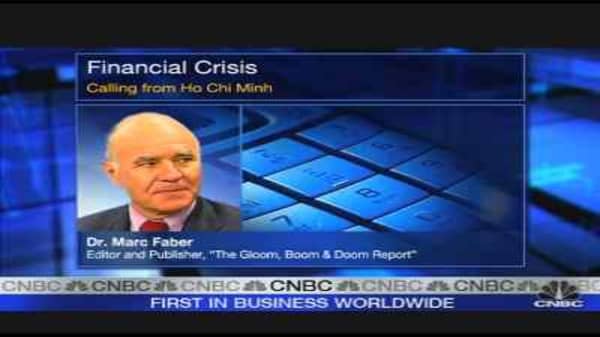
"Now that deposits are guaranteed, basically I as an investor have no incentive to hold equities so I sell them and put my money in bank deposits," Faber told "Squawk Box Europe" by telephone.
The other measures taken by various governments to try and prop up ailing markets have had the opposite effect, he added.
(Watch the full CNBC interview with Marc Faber above).
"The interventions, they actually have increased volatility. It’s impossible to forecast market movements when you have interventions," Faber said.
The next stage of the crisis may be that companies may have to adjust their book value as it happened during the bear markets of the 70s and 80s, when book value was overstated.
"If the global economy slows down by as much as I think it will… then a lot of book values will have to be adjusted downward quite substantially," he said.
And central banks cutting rates based on the assumption that the downturn will dampen inflationary effects will have another headache when the worst of the crisis is over, Faber warned.
"I think first we’ll have a bout of deflation that will actually be quite substantial… but then the budget deficits will go through the roof and the Fed will print even more money … and then later on we'll have very high inflation," he said.

