![]()
- Markets Finally Get Greek Deal —So Where's the Rally?
- 'Mortgage Deal from Hell' Hurts Sound Borrowers: Bove
- Fidelity: 401(k) Balances Little Changed Over 2011
- Are Young American Workers a 'Lost Generation'?
- Westminster’s Most Successful Dog Breeds
- Greek Political Leaders Agree On Austerity Reforms
- Robo-Deal Is All About Lowering Mortgage Principal
- Fed Fines Banks $766 Million Over Mortgage Practices
- Spent Keurig K-Cups Filling Up US Landfills

MOST SHARED
- Warren Buffett: Stocks Will Outperform Gold and Bonds .. and They're Safer 'By Far'
- Steelers' Antonio Brown Spends Super Bowl Week with Twitter Fan Turned BFF
- Investor Optimism At Highest In One Year: Survey
- Markets Get Greece Deal, So Where's the Big Rally?
- How to Get Your Name on the Bathroom Wall 4-EVER
- Indonesia Unexpectedly Cuts Rate to Seek Growth
- Kodak to Stop Making Cameras to Cut Costs
- Robo-Deal Is All About Lowering Mortgage Principal
- The Euro Still Has Room to Rise: Strategist
- Greeks Burn German Flags: Do They Have a Point?
MOST POPULAR
HOT ON FACEBOOK
Homeowners Take a Stand, Demand Original Paperwork
Kathy Lovelace lost her job and was about to lose her house, too. But then she made a seemingly simple request of the bank: Show me the original mortgage paperwork.
And just like that, the foreclosure proceedings came to a standstill.
Lovelace and other homeowners around the country are managing to stave off foreclosure by employing a strategy that goes to the heart of the whole nationwide mess.
During the real estate frenzy of the past decade, mortgages were sold and resold, bundled into securities and peddled to investors. In many cases, the original note signed by the homeowner was lost, stored away in a distant warehouse or destroyed.
Persuading a judge to compel production of hard-to-find or nonexistent documents can, at the very least, delay foreclosure, buying the homeowner some time and turning up the pressure on the lender to renegotiate the mortgage.
"I'm going to hang on for dear life until they can prove to me it belongs to them," said Lovelace, a 50-year-old divorced mother who owns a $200,000 home in Zephyrhills, near Tampa. "I'll try everything I can because it's all I have left."
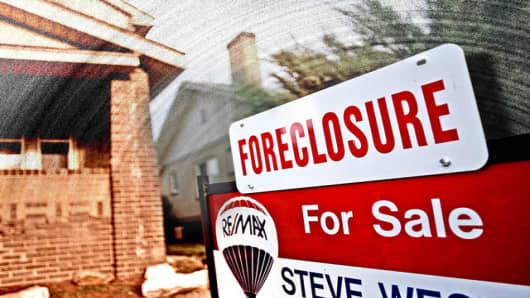
![]() |
David Zalubowski / AP |
More than 2.3 million homeowners faced foreclosure proceedings last year and millions more are in danger of losing their homes. On Wednesday, President Obama will unveil a plan to spend at least $50 billion to help homeowners fend off foreclosure.
Chris Hoyer, a Tampa lawyer whose Consumer Warning Network Web site offers the free court documents Lovelace used to file her request, has played a major role in promoting the produce-the-note strategy.
"We knew early on that the only relief that would ever come to people would be to the people who were in their houses," Hoyer said. "Nobody was going to fashion any relief for people who have already lost their houses. So your only hope was to hang on any way you could."
Tom Deutsch, deputy executive director of the American Securitization Forum, a group that represents banks, law firms and investors, dismissed the strategy as merely a stalling tactic, saying homeowners are "making lawyers jump through procedural hoops to delay what's likely to be inevitable."
Deutsch said the original note is almost always electronically retained and can eventually be found.
Judges are often willing to accept electronic documentation. And lenders are sometimes allowed to produce other paperwork to establish they are the holder of a loan. Still, assembling such documents to a judge's satisfaction takes time, which to homeowners is the point.
Lovelace filed her produce-the-note demand last fall after the bank acknowledged that her original mortgage document had been lost or destroyed. Since then, there has been no activity on the foreclosure — no letters from the lender, no court filings.
The law firm handling the foreclosure for the lender refused to comment.


