BUSINESS NEWS FROM NYTIMES.COM
![]()
- 'Mortgage Deal from Hell' Hurts Sound Borrowers: Bove
- Fidelity: 401(k) Balances Little Changed Over 2011
- Greek Political Leaders Agree On Austerity Reforms
- Robo-Deal Is All About Lowering Mortgage Principal
- Fed Fines Banks $766 Million Over Mortgage Practices
- Options Trader Scores Big on Diamond Foods Selloff
- 12 Unique Dating Sites
- Zuckerberg Takes Control, You Get $100
- Ban on Insider Trading by Congress Passes House
MOST SHARED
- Steelers' Antonio Brown Spends Super Bowl Week with Twitter Fan Turned BFF
- 'Mortgage Deal from Hell' Hurts Responsible Borrowers: Bove
- FBI Investigated Steve Jobs Drug Use
- Mortgage Plan Gives Homeowners Bulk of the Benefits
- Rise of the Solo Economy
- More States Looking to Tax Online Sales
- Rough Seas Ahead in the South Pacific
- Can Anybody Be an Entrepreneur?
- Top Fashion Stocks for 2012
- How to Date a Wall Street Man
MOST POPULAR
HOT ON FACEBOOK
How Ford Avoided the Meltdown that Hit GM, Chrysler
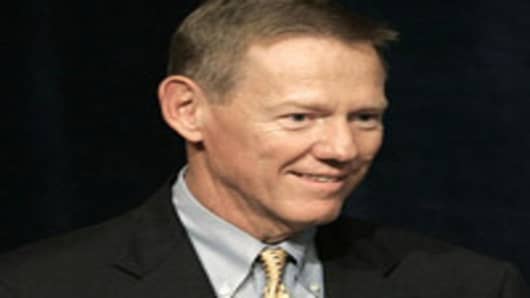
On Nov. 29, 2006, Ford Motor made a surprising pitch to the nation’s biggest banks. In a packed ballroom at a New York hotel, Ford’s chief executive, Alan R. Mulally, said he would mortgage all the company’s assets for billions of dollars in loans to finance an overhaul of the troubled automaker. Although the economy was healthy then, Mr. Mulally said the money would give Ford “a cushion to protect for a recession or other unexpected event.”
At the time, the request was considered an act of desperation. But the $23.6 billion in loans it received turned out to be Ford’s salvation.
![]() |
AP Alan Mulally |
Plunging car sales have driven its two American rivals, General Motors and Chrysler, to the brink of bankruptcy, forcing them to borrow $17.4 billion from the federal government to stay in business. The future of both companies will be decided in the weeks to come by President Obama and his special auto task force.
But because of the money it borrowed nearly three years ago, Ford is in far better shape than its two crosstown rivals. The loans have kept it independent and on a course to survive the worst new-vehicle market in nearly 30 years.
“It was a defining moment for us,” Mr. Mulally said in an interview. “But they never would have been willing to lend us the money if we weren’t on a different path.”
Mr. Mulally had been on the job as Ford’s chief executive less than 90 days when he asked for the loans. But as he told the bankers, he was prepared to make tough decisions, including selling off brands, shedding jobs and focusing Ford’s efforts on small cars rather than trucks and sport utility vehicles.
![]() |
Since then, he has accelerated Ford along that path, pursuing a top-to-bottom transformation that extends from its global product lineup to its renewed focus on the Blue Oval trademark.
As a result, for the first time in decades, Ford’s fortunes no longer seem so closely tied to the broader fate of Detroit.
Mr. Mulally, 63, is doing all he can to separate Ford in the public’s mind from its hometown competitors.
To emphasize his point, he pulled out a recent newspaper cartoon that compared college basketball’s Final Four to Toyota [TM
Loading...
()
], Honda [HMC
Loading...
()
], Volkswagen—and Ford [F
Loading...
()
].
“We are competing against the best in the world,” Mr. Mulally said. “It’s not just with the companies in the U.S.”
While GM [GM
Loading...
()
] and Chrysler wait for more federal aid, Ford is capitalizing on its status as the only one of the Big Three in Detroit to make it, so far, on its own.
Some surveys are showing consumers migrating away from GM and Chrysler to Ford showrooms. Inside Ford headquarters here in Dearborn, management sees a unique opportunity to expand its market share and further separate Ford from the competition.
“I don’t take any joy in watching GM and Chrysler struggle,” said William C. Ford Jr., the company’s executive chairman. “I wish them well, but I wish us better. I want us to win.”
Ford is hardly out of the woods. The company lost $14.6 billion last year, when its vehicle sales in the United States slumped 20 percent, compared with 22 percent at GM and 30 percent at Chrysler.
Its once-bulging bank account is dwindling as well. Industry analysts estimate that Ford has about a year’s worth of cash left to carry it through a still-depressed car market.
Still, Ford’s decision to borrow billions in 2006 when the capital markets were thriving will go down as one of the most significant moves in the company’s 105-year history.
“We believe this foresight to strengthen the company’s balance sheet is what has separated Ford from its crosstown rivals during the economic downturn,” a Merrill Lynch analyst, John Murphy, said in a report to investors this week.