

The U.S. government is set to release the official stress test results for 19 banks Thursday afternoon. And criticisms of these tests, which are aimed at determining a bank's vulnerability in a severe downturn, are growing.
woodleywonderworks
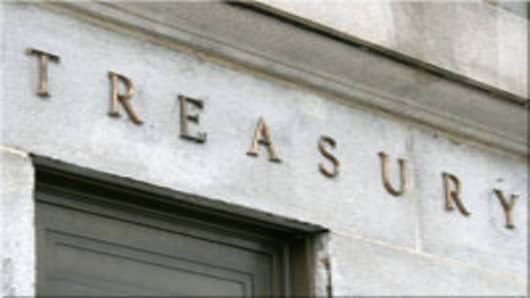
Treasury Building
Nouriel Roubini, co-founder and chairman at RGE Monitor, also known as Dr. Doom, feels these tests lack credibility and simply aren't stressful enough as the actual economic data are far worse than the worst case scenario of these tests.
"(But) if you assume the results have been leaked are true, you're going to find out that a large number of financial institutions have significant capital needs," Roubini told CNBC.
He also warns the government's plan to make banks covert more preferred shares to common stocks could lead to a creeping nationalization of the banks.
"Weaker institutions are going to find it very hard to raise money in the private sector because they're going to be further diluted by the government converting preferred into common shares. So eventually we may go into a creeping process of partial nationalization of some financial institutions," Roubini added.

Roubini suggests that if the end goal is to keep banks in the private sector, it might make more sense to convert the claims of bank creditors into equity.
"The traditional way of resolving a problem of too much debt and not enough equity is to convert some of the debt into equity. That would maintain the banks in private hands. We don't want to do that because we're worried about the losses taken by these creditors, but then we're forced into a partial nationalization of the financial system, which in my view is worse," Roubini said.
U.S. regulators earlier released capital guidelines for the nation's 19 largest financial institutions under the government's stress test and said banks needing fresh capital will have until June 8 to develop a plan and Nov. 9 to raise the capital.
Treasury Secretary Timothy Geithner also said in an interview that he gave to the Charlie Rose Show for broadcast later on Wednesday, that none of the 19 banks being examined under stress tests are at risk of insolvency.
(Click on the video to watch the full Nouriel Roubiniinterview)

