Skip navigation


Current DateTime: 08:35:46 29 Nov 2009
LinksList Documentid: 24355697
  • Runway Angels

      The superbowl of fashion shows, models walk down the runway at the 2009 Victoria's Secret Show.

  • Smartphone Guide

      Here's a need-to-know guide to nine devices, based on features, price, network and platform.

  • Wines for the Holidays

      Not quite sure what wine to pair with Turkey or Creme Brulee? Our experts do.

FEATURED QUIZZES


Current DateTime: 08:35:46 29 Nov 2009
LinksList Documentid: 33793611
  • How Well Do You Know Your Bird?

      Let's talk turkey. Test your turkey knowledge and perhaps pick up a bit of trivia to trot out at your holiday meal.

  • A Healthier & Wealthier You

      Take the following quiz and find out how much you know about the impact of obesity on the health of the U.S. economy.

  • The Billionaire BFF's

      Philanthropists. Bridge partners. Hockey players. Which responses are based on facts from Buffett's and Gates' real lives?


Current DateTime: 08:35:47 29 Nov 2009
LinksList Documentid: 24890560
  • Winterizing Your Portfolio

      If 2009 was the winter of our discontent, will 2010 be a winter wonderland for investors? A lot depends on the recovery—or lack thereof.

  • Investor's Guide to Real Estate

      Some even say the long-awaited recovery is here. Regardless, buyers and sellers alike can profit from our guide.

  • Alternative Investing

      Stocks and bonds? Sure. But it's a big world out there for investors.

powered by digg
The 31-Year-Old in Charge of Dismantling GM
By: David E. Sanger, The New York Times | 01 Jun 2009 | 04:34 AM ET
Text Size

It is not every 31-year-old who, in a first government job, finds himself dismantling General Motors and rewriting the rules of American capitalism.

But that, in short, is the job description for Brian Deese, a not-quite graduate of Yale Law School who had never set foot in an automotive assembly plant until he took on his nearly unseen role in remaking the American automotive industry.

Nor, for that matter, had he given much thought to what ailed an industry that had been in decline ever since he was born. A bit laconic and looking every bit the just-out-of-graduate-school student adjusting to life in the West Wing — “he’s got this beard that appears and disappears,” says Steven Rattner, one of the leaders of President Obama’s automotive task force — Mr. Deese was thrown into the auto industry’s maelstrom as soon the election-night parties ended.

“There was a time between Nov. 4 and mid-February when I was the only full-time member of the auto task force,” Mr. Deese, a special assistant to the president for economic policy, acknowledged recently as he hurried between his desk at the White House and the Treasury building next door. “It was a little scary.”

But now, according to those who joined him in the middle of his crash course about the automakers’ downward spiral, he has emerged as one of the most influential voices in what may become President Obama’s biggest experiment yet in federal economic intervention.

While far more prominent members of the administration are making the big decisions about Detroit, it is Mr. Deese who is often narrowing their options.

A month ago, when the administration was divided over whether to support Fiat’s bid to take over much of Chrysler, it was Mr. Deese who spoke out strongly against simply letting the company go into liquidation, according to several people who were present for the debate.

“Brian grasps both the economics and the politics about as quickly as I’ve seen anyone do this,” said Lawrence H. Summers, the head of the National Economic Council who is not known for being patient whenever he believes an analysis is sub-par — or disagrees with his own. “And there he was in the Roosevelt Room, speaking up vigorously to make the point that the costs we were going to incur giving Fiat a chance were no greater than some of the hidden costs of liquidation.”

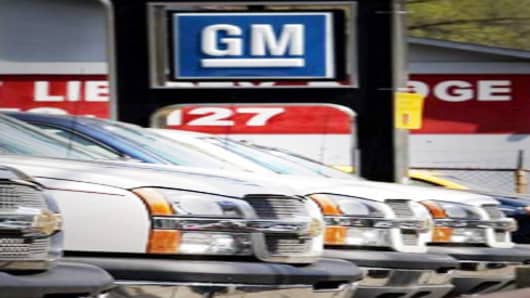
General Motors
AP

Mr. Deese was not the only one favoring the Fiat deal, but his lengthy memorandum on how liquidation would increase Medicaid costs, unemployment insurance and municipal bankruptcies ended the debate. The administration supported the deal, and it seems likely to become a reality on Monday, if a federal judge handling the high-speed bankruptcy proceeding approves the sale of Chrysler’s best assets to the Italian carmaker.

Mr. Deese’s role is unusual for someone who is neither a formally trained economist nor a business school graduate, and who never spent much time flipping through the endless studies about the future of the American and Japanese auto industries.

He lives a dual life these days. He starts the day at a desk wedged just outside of Mr. Summers’s office, where he can hear what young members of the economic team have come to know as “the Summers bellow.” From there, he can make it quickly to the press office to help devise explanations for why taxpayers are spending more than $50 billion on what polls show is a very unpopular bailout of the auto industry.

Several times a day he speed-walks to Treasury, taking a shortcut through the tunnel under the colonnade, near the kitchens. The other day he talked about how sharply perceptions of the industry’s future changed after Mr. Obama’s election.

“At the first meeting with Rick Wagoner,” he said, referring to GM’s recently deposed chief executive, “they were in a very different place. He said publicly that bankruptcy was not a viable option. It’s been a long process getting everyone to look at the options differently.”

In fact, from before Inauguration Day, few in Mr. Obama’s circle saw any other choice. Every time Mr. Deese ran the numbers on GM [GM  Loading...      ()   ] and Chrysler, he came back with the now-obvious conclusion that neither was a viable business, and that their plans to revive themselves did not address the erosion of their revenues. But it took the support of Mr. Rattner and Ron Bloom, senior advisers to the task force charged with restructuring the automobile industry, to help turn Mr. Deese’s positions into policy.

“The president’s instruction to us was that we had to come up with a solution that would work on a commercial basis, that didn’t involve indefinite federal financing,” Mr. Deese said. “But we didn’t want liquidation, which would have even worse effects. So the question was how do you design a very substantial restructuring, and do it fast.”

Mr. Deese’s route to the auto table at the White House was anything but a straight line. He is the son of a political science professor at Boston College (his father) and an engineer who works in renewable energy (his mother). He grew up in the Boston suburb of Belmont and attended Middlebury College in Vermont. He went to Washington to work on aid issues and was quickly hired by Nancy Birdsall, a widely respected authority on the effectiveness of international aid and the founder of the Center for International Development.

But he wanted to learn domestic issues as well, and soon ended up working as an assistant for Gene Sperling, who 17 years ago in the Clinton White House played a similar role as economic policy prodigy. Eventually, Mr. Deese headed to Yale for his law degree. But his e-mail box was constantly filled with messages from friends in Washington who were signing up to work for the Obama or Hillary Rodham Clinton campaigns. Mr. Deese chose Senator Clinton’s.

“He was pretty quickly functioning as the top economic policy staffer through her campaign,” Mr. Sperling said. “He could blend the policy needs and the political needs pretty seamlessly.” On the day that the Clinton campaign ended, Mr. Deese left her concession speech and received a message on his BlackBerry from a friend in the Obama campaign urging him to sign on immediately to Mr. Obama’s team.


Current DateTime: 08:35:48 29 Nov 2009
LinksList Documentid: 22528754

He resumed his policy work there, and found himself stuck in Chicago — unable to fly to Washington with his dog — as the economic crisis deepened. Finally, one night, he decided to get into his car with his dog and just started driving back to Washington. Tired, he pulled over to catch some sleep in the car.

“I slept in the parking lot of the G. M. plant in Lordstown, Ohio,” he recalled. The giant plant, opened during GM’s heyday in the mid-1960s, is where the Pontiac G5 is produced. Under the plan Mr. Deese worked on when he arrived in Washington, Pontiac will disappear.

“I guess that was prophetic,” he said, shaking his head.

This story originally appeared in the The New York Times
Tools:
Print EmailAdd This share icon
  • digg share

CNBC HIGHLIGHTS

  • These four sectors will be the next to lead the market.
  • Zhu Zhu Pets are this year's must-have toy, fetching $40 or more on eBay.
  • T shirt man
  • From the why-didn’t-I-think-of-that file, we present Jason Sadler, a man whose job is wearing T-shirts.
  • It may be the most unusual guide to business you'll read.
  • Shopping for a gadget hound? The choices can be baffling. Here are a few that should be a hit.
  • "The Who" will be the halftime act for Super Bowl XLIV on Feb. 7 in Miami. Is the NFL behind the times?
ADD COMMENTS
Remaining characters


Current DateTime: 01:06:02 29 Nov 2009
LinksList Documentid: 29778428

Current DateTime: 01:01:45 29 Nov 2009
LinksList Documentid: 29779196

Current DateTime: 01:03:47 29 Nov 2009
LinksList Documentid: 29779199

Current DateTime: 01:01:46 29 Nov 2009
LinksList Documentid: 29779198
  Data is a real-time snapshot  *Data is delayed at least 15 minutes
Global Business and Financial News, Stock Quotes, and Market Data and Analysis

© 2009 CNBC, Inc.  All Rights Reserved.
A Division of NBC Universal
Thomson ReutersThomson Reuters