

Facing mounting criticism that Apple CEO Steve Jobs acquired a donated liver somehow through unethical means, the hospital where Jobs had the operation took the extraordinary step of confirming the surgery, and offered the reasons why Jobs was a prime candidate for the organ.
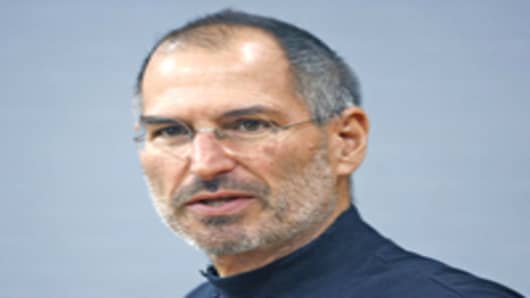
AP
Steve Jobs
Dr. James D. Eason, program director at Methodist University Hospital Transplant Institute and chief of transplantation "confirmed today, with the patient's permission, that Steve Jobs received a liver transplant at Methodist University Hospital Transplant Institute in partnership with the University of Tennessee in Memphis," according to a statement from the hospital.
"Mr. Jobs underwent a complete transplant evaluation and was listed for transplantation for an approved indication in accordance with the Transplant Institute policies and United Network for Organ Sharing (UNOS) policies," the statement continued.
"He received a liver transplant because he was the patient with the highest MELD score (Model for End-Stage Liver Disease) of his blood type and, therefore, the sickest patient on the waiting list at the time a donor organ became available," Dr. Eason said.
Apple spokesman Steve Dowling would not comment on the hospital's statement.
However, two sources at Apple told me tonight that both Jobs and the hospital were facing increased criticism that Jobs used his wealth and status to secure the donated liver. The Wall Street Journal, which broke this story, raised the issue in its Friday evening coverage that there might be a perception that Jobs state-shopped, looking for the shortest wait-list for a liver transplant.
In fact, in March when we were chasing this story, I spoke with one of the top liver transplant surgeons in the world who remained skeptical that Jobs would choose the facility in Memphis.
Hospital officials answered that concern tonight, saying, "The Methodist University Hospital Transplant Institute performed 120 liver transplants in 2008 making it one of the ten largest liver transplant centers in the United States. We provide transplants to patients regardless of race, sex, age, financial status, or place of residence. Our one-year patient and graft survival rates are among the best in the nation and were a dominant reason in Mr. Jobs’s choice of transplant centers."
The blogosphere has been rife with speculation that Jobs may have figured out a way to cut in line, and there have been questions as to how he was able to secure the liver.
These sources say the same charges were leveled against Methodist University Hospital. And after a while, both the hospital and Jobs decided it was best to come forward to mitigate the criticism.
For the famously private Jobs, allowing the hospital to release this statement shows just how serious the criticism was, how loud the complaints had become, and how deeply they were felt by both hospital officials and Mr. Jobs himself, a source told me.
According to the statement, "Mr. Jobs is now recovering well and has an excellent prognosis."
Questions? Comments? TechCheck@cnbc.com