Realty Check
- 100% Mortgage Financing From USDA
- Despite Government Aid, Foreclosure Crisis is Not Improving
- Housing Data Delivers Mixed Messages
- Appraisals Now Center Stage in Housing Recovery
- Underwater Mortgages Could Sink Even Deeper
- First Time Buyers Rescue Housing: Realtors
- Housing Recovery 'Still In Uncharted Territory': HUD Secretary
- Shadow Inventory Dwarfs Loan Mods
- The Battered Businesses Behind Housing
- Watch Foreclosures, Seriously
- CNBC VIDEO: Warren Buffett & Bill Gates 'Walk & Talk' at Columbia University
- U.S. Stocks Slip, Dollar Rises
- How Stock Investors Can Play Holiday Travel
- Time Lapse World Series Is A Great Play
- Hirschhorn: Greed...or Fear
- My Top 10 Tech Toys for the Holidays
- iPhone a Better Gaming Platform Than Android?
- May Day For Dendreon
- 100% Mortgage Financing From USDA
- Wave of Debt Payments Facing US Government
- US Job Losses to Bottom out Next Quarter: NABE
- Little Sign of Inflation on the Horizon: IMF
- Kraft Weighs Higher Cadbury Bid as Rivals Circle
- MBS Program Should be Extended: Fed's Bullard
- JPMorgan's Dimon Could Succeed Geithner: Report
- Wall Street Finds Profits by Reducing Mortgages
- Warren Buffett, Bill Gates 'Walk & Talk' At Columbia
- Microsoft, News Corp Weigh Online News Pact
RSS FEED
CNBC Real Estate Reporter
A lot of folks are parsing the latest S&P Case Shiller home price report out today, and debating whether some month-to-month increases are proof of home price stabilization nationwide. I frankly think it’s impossible to say anything nationwide, because a lot of different markets are reacting very differently. That may seem an incredibly prosaic thing to say, but I think an awful lot of smart folks often lose sight of that.
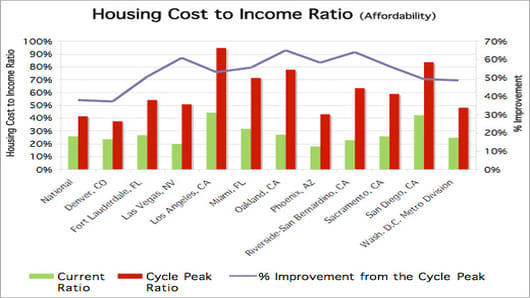
I want to focus today on a couple of charts I got from John Burns over at John Burns Real Estate Consulting. He chooses to look at affordability and the Rental Gap (that is how much more or less it costs to own versus to rent) as better indicators of price direction.
First, take a look at the Rental gap:
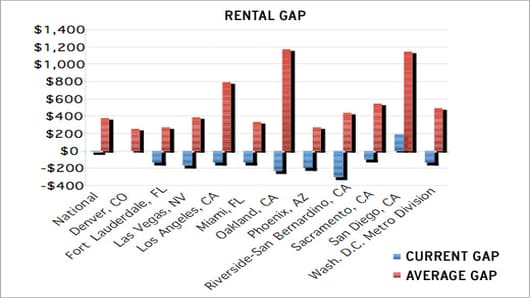
As you can see, it is now far more economical to own in many of the formerly hot markets than it is to rent. “We're seeing payments now that are the best they've been since we've been tracking this and we've been tracking this since 1981,” says John Burns. “So all those people who maybe missed out on the boom couldn’t afford to buy a home when prices were what they were in 2005 can now get in and buy a home.”
Now look at affordability. This is a tricky chart, but fascinating:

Questions? Comments?


