

The US is too dependent on Japan and China buying up the country's debt and could face severe economic problems if that stops, Tiger Management founder and chairman Julian Robertson told CNBC.
CNBC.com
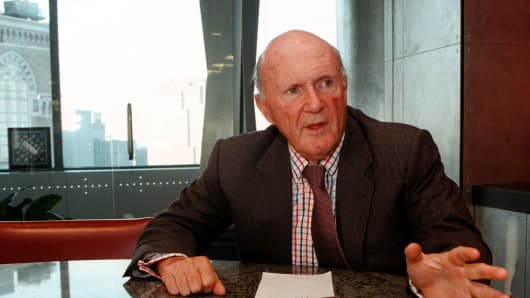
Julian Robertson, founder and former CEO of Tiger Management
"It's almost Armageddon if the Japanese and Chinese don't buy our debt,” Robertson said in an interview. "I don't know where we could get the money. I think we've let ourselves get in a terrible situation and I think we ought to try and get out of it."
Robertson said inflation is a big risk if foreign countries were to stop buying bonds.
“If the Chinese and Japanese stop buying our bonds, we could easily see [inflation] go to 15 to 20 percent,” he said. “It's not a question of the economy. It's a question of who will lend us the money if they don't. Imagine us getting ourselves in a situation where we're totally dependent on those two countries. It's crazy.”
- Watch the Interview With Julian Robertson (Pt. 2)
- Slideshow: The Biggest Holders of US Government Debt
Robertson said while he doesn’t think the Chinese will stop buying US bonds, the Japanese may eventually be forced to sell some of their long-term bonds.
“That's much worse than not buying,” he said. “The other thing is, they're buying almost exclusively short-term debt. And that's what we are offering, because we can't sell the long-term debt. And you know, the history has been that people who borrow short term really get burned.”
The only way to avoid the problem, he said, is to "grow and save our way out of it."
"The U.S. has to quit spending, cut back, start saving, and scale backward," Robertson said. "Until that happens, I don't think we're anywhere near out of the woods.”
Robertson is not very optimistic about the short-term.
“We're in for some real rough sledding,” he said. “ I really do think the recession is at least temporarily over. But we haven't addressed so many of our problems and we are borrowing so much money that we can't possibly pay it back, unless the Chinese and Japanese buy our bonds.”
