

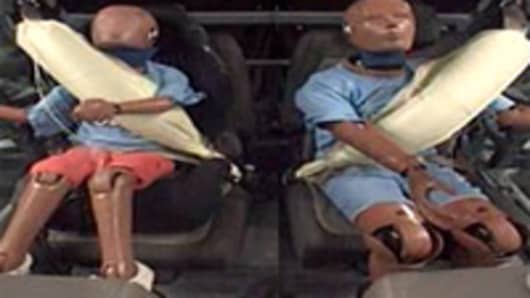
After 10 years of research and development, Ford is unveiling inflatable seat belts.
This is a potentially ground breaking innovation in safety aimed at better protecting people in the second and third rows of cars involved in accidents.
Statistics show passengers in the second row of vehicles wear their seat belts just 74% of the time, compared with 83% for those in the front seat.
Inflatable seat belts, before they've been deployed, look like padded regular seat belts. When there is an accident, the belts open up and in less than 2 tenths of a second an air bag inflates, diffusing pressure on the chest as the passenger is thrown forward in a crash.
Ford engineer Srini Sundararajan has been working on the inflatable belts the last ten years and says their value goes well beyond the protection it provides. But the fact it's a padded, more comfortable seat belt means more passengers, especially kids, will be encouraged to buckle up. For years, engineers have been looking for ways to reduce or eliminate "seat belt syndrome".
Seat belt syndrome refers to the fact many kids under 8 have suffered internal or spinal injuries because they were not properly belted in. Sometimes kids put the shoulder strap behind them because it's uncomfortable. Sometimes they're too small and the belt doesn't hold them in place effectively, or constricts across their bellies, causing internal injuries.
The Children's Hospital of Philadelphia and researchers at Rowan University in New Jersey have been studying this problem for years. They're work, along with the efforts of others have helped auto makers do a better job of addressing how to better protect kids in cars. Inflatable belts, along with getting more kids in booster seats, could be the next step in keeping kids safe in the back seat.
_____________________________________
Click on Ticker to Track Corporate News:
- Ford Motor
- Toyota Motor
- Nissan
- Honda Motor
_____________________________________
Questions? Comments? BehindTheWheel@cnbc.com
