

The US housing market is starting to recover, thanks in part to the government's tax-credit for first-time home buyers, Richard Smith, president & CEO of Realogy, the world's largest brokerage operator, told CNBC.
Casey Serin
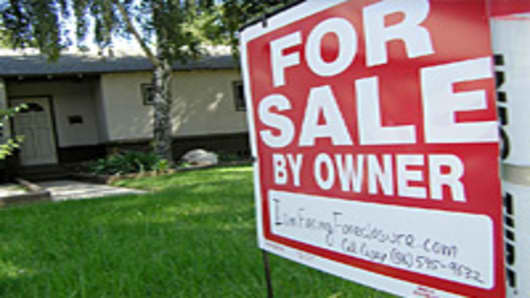
For Sale By Owner
"We don’t see this as a one-time event," he said in an interview. "This is literally the beginning of a correction in housing."
"In the broadest sense, we cannot have a true recovery in the economy unless we turn housing around," he said. "The simple fact is, it’s 20 percent of the GDP. Housing has historically led us into recessions and historically let us out."
The market has corrected by some 28 percent from peak to trough, he said. While existing home sales should increase 12-13 percent, new home sales should reach the 20-21 percent range, he said.
Meanwhile, the extension of the homebuyer tax credit has already been built-in to forecasts and is necessary to stimulate the U.S. economy, said Smith.
"You had a lot of demand that was showing up in the way of closings just prior to the expiration of the former credit," he said. "So literally the thought, and I think it was a justified thought, that closings were going to fall off a cliff in anticipation of the next step, whatever that may have been at the time."
However, not everyone expects the home buyer tax credit to make a difference. Some builders say they are more likely to hold on to that cash than invest it.
Although the FHA is at risk of higher delinquency rates, said Smith, the agency will tighten its underwriting and down payment standards.
"Their down payment requirements are low by any standard, 3.5 percent, which suggests to me that unless you have equities, true skin in the game, you have a better chance of walking away from that loan," he said.
Down payment requirements will be raised to 5 percent, he said, though should be increased by as much as 10 percent. More stringent requirements will not have a negative effect on the housing market, he said.
"There's a certain complacency built into the marketplace right now, where people think that 4-5 percent mortgage money is the norm. It's not. We'll see 6.5-7 percent when this recovery starts occurring."
