Go Symbol Lookup
Loading...

US Does Not Have Capitalism Now: Stiglitz

 Text Size  
Published: Tuesday, 19 Jan 2010 | 8:39 AM ET
By: CNBC.com
Source: Wikipedia
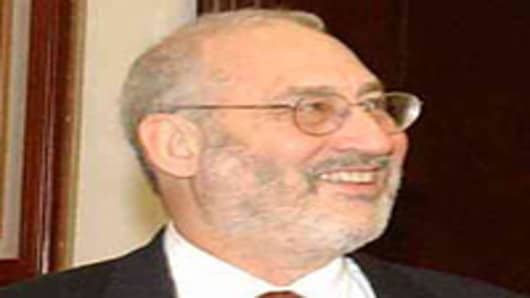
Joseph E. Stiglitz

Layers of money managers that don't bear the brunt of losses but walk away with big payouts when things go well have turned the US economy to a type of "ersatz capitalism," Joseph Stiglitz, Columbia University professor and Nobel laureate, told CNBC Tuesday.

"An awful lot of people are not managing their own money," Stiglitz said. "In old-style 19th Century capitalism, I owned my company, I made a mistake, I bore the consequences."

"Today, (at) most of the big companies you have managers who, when things go well, walk off with a lot of money. When things go bad the shareholders bear the costs," he said.

Even worse, those giving the money to the companies are entities like pension funds that are managing money on behalf of other people, so there are "layers and layers of agency costs," Stiglitz said.

It's a system where "you socialize the losses and privatize the gains," which is not capitalism, he said.

There's "moral hazard everywhere," he added.

Need for Better Rules, Better Refs

Stiglitz stressed he is a big believer in market economies, but added that "if you don't have the right rules and you don't have the right referees the game doesn't work."

The Financial "Freefall"
Discussing the costs of the crisis, with Joseph Stiglitz 2001 Nobel Prize winner and Columbia University professor.

While stripping away rules like the Glass-Steagall Act -- which separated commercial and investment banks -- created an environment where credit default swaps and derivatives could thrive, he said.

"It was very clear that after the 1998 Long Term Capital Management (crisis), when one company almost brought down the global financial system, that we needed to do something, and yet we passed a law saying regulators couldn't do anything," Stiglitz said.

For 50 years after the depression there was lots of regulation and not one financial crisis and in the last 30 years there have been 100 financial crises, he said.

As for the argument that regulation stifles innovation, Stiglitz cited former Federal Reserve Chairman Paul Volcker, who said: "it's hard to find any evidence from anybody who's not in the industry that can show any clear link between the so-called financial innovations and increased productivity in our economy."

Instead of creating products to manage risks, the financial markets created new products that increased risks, Stiglitz added.

 Print
Layers of money managers that don't bear the brunt of losses but walk away with big payouts when things go well have turned the US economy to a type of "ersatz capitalism," Joseph Stiglitz, Columbia University professor and Nobel laureate, told CNBC Tuesday.

   
Comments


More Comments


Add Comments


Your Comments (Up to 1100 characters):

Remaining characters

Your comments have not been posted yet.

Please review your submission to make sure you are comfortable with your entry.

Your Comments:


Featured