BUSINESS NEWS FROM NYTIMES.COM
![]()
- California, New York to Join States in Mortgage Deal
- Stock Market's Three-Year Rally Has Fed to Thank
- Greece to Get More Time to Fix Budget: Party Official
- Diamond Foods Puts CEO, CFO on Leave; Stock Plunges
- Cisco Beats Earnings Expectations, Raises Dividend
- Groupon Posts Positive Revenue, Misses on Earnings
- 12 Unique Dating Sites
- Washington Lawmakers Pass Gay Marriage Bill
- Visa Earnings Top Forecasts as Credit-Card Use Climbs
- Bindi: Charm is Not Enough for Italy's Prime Minister Mario Monti
- Tobacco Stocks a Hot Dividend Play: Analyst
- Is Apple Coming to Sam’s Club Stores?
- Gas Prices in All 50 States Back Above $3 a Gallon
- Is America Ready for a Bacon Milkshake?
- As Mortgage Refinancings Surge, Banks Struggle
- Forget the Earnings, Disney’s Issue Is the Multiple: Analyst
- W Hotels 'Fashion Next' Partnership to Hit the Runway
- Drug Stocks Do Well in ‘Gloom and Doom’ Market: Analyst
MOST SHARED
- Greek Party Leaders Fail to Agree on Bailout Package
- China Central Bank Uses New Tactics on Gentle Easing Path
- How to Date a Wall Street Man
- Pros Bullish On Visa, Even After It Hits a New High
- Visa Earnings Top Forecasts as Credit-Card Use Climbs
- Telstra First-Half Profit Up, Keeps Annual Guidance
- Diamond Foods Puts CEO, CFO on Leave; Stock Plunges
- Semantics Suggest Higher Bid Ahead for Illumina: Finerman
- Cisco Gets Boost From the Cloud, Cost-Cutting: CEO
- Groupon Posts Positive Revenue, Misses On Earnings
MOST POPULAR
HOT ON FACEBOOK
No Help in Sight, More Homeowners Walk Away
The New York Times
In 2006, Benjamin Koellmann bought a condominium in Miami Beach. By his calculation, it will be about the year 2025 before he can sell his modest home for what he paid. Or maybe 2040.
“People like me are beginning to feel like suckers,” Mr. Koellmann said. “Why not let it go in default and rent a better place for less?”
![]() |
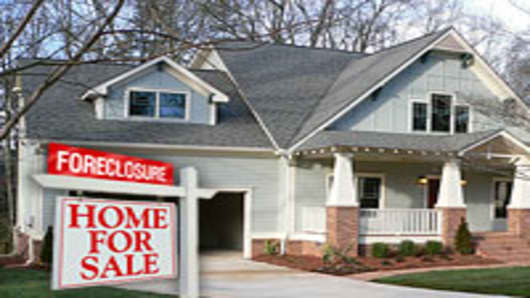
After three years of plunging real estate values, after the bailouts of the bankers and the revival of their million-dollar bonuses, after the Obama administration’s loan modification plan raised the expectations of many but satisfied only a few, a large group of distressed homeowners is wondering the same thing.
New research suggests that when a home’s value falls below 75 percent of the amount owed on the mortgage, the owner starts to think hard about walking away, even if he or she has the money to keep paying.
In a situation without precedent in the modern era, millions of Americans are in this bleak position. Whether, or how, to help them is one of the biggest questions the Obama administration confronts as it seeks a housing policy that would contribute to the economic recovery.
“We haven’t yet found a way of dealing with this that would, we think, be practical on a large scale,” the assistant Treasury secretary for financial stability, Herbert M. Allison Jr., said in a recent briefing.
The number of Americans who owed more than their homes were worth was virtually nil when the real estate collapse began in mid-2006, but by the third quarter of 2009, an estimated 4.5 million homeowners had reached the critical threshold, with their home’s value dropping below 75 percent of the mortgage balance.
They are stretched, aggrieved and restless. With figures released last week showing that the real estate market was stalling again, their numbers are now projected to climb to a peak of 5.1 million by June — about 10 percent of all Americans with mortgages.
“We’re now at the point of maximum vulnerability,” said Sam Khater, a senior economist with First American CoreLogic, the firm that conducted the recent research. “People’s emotional attachment to their property is melting into the air.”
Suggestions that people would be wise to renege on their home loans are at least a couple of years old, but they are turning into a full-throated barrage. Bloggers were quick to note recently that landlords of an 11,000-unit residential complex in Manhattan showed no hesitation, or shame, in walking away from their deeply underwater investment.
“Since the beginning of December, I’ve advised 60 people to walk away,” said Steve Walsh, a mortgage broker in Scottsdale, Ariz. “Everyone has lost hope. They don’t qualify for modifications, and being on the hamster wheel of paying for a property that is not worth it gets so old.”
Mr. Walsh is taking his own advice, recently defaulting on a rental property he owns. “The sun will come up tomorrow,” he said.
The difference between letting your house go to foreclosure because you are out of money and purposefully defaulting on a mortgage to save money can be murky. But a growing body of research indicates that significant numbers of borrowers are declining to live under what some waggishly call “house arrest.”
Using credit bureau data, consultants at Oliver Wyman calculated how many borrowers went straight from being current on their mortgage to default, rather than making spotty payments. They also weeded out owners having trouble paying other bills. Their estimate was that about 17 percent of owners defaulting in 2008, or 588,000 people, chose that option as a strategic calculation.
Some experts argue that walking away from mortgages is more discussed than done. People hate moving; their children attend the neighborhood school; they do not want to think of themselves as skipping out on a debt. Doubters cite a Federal Reserve study using historical data from Massachusetts that concludes there were relatively few walk-aways during the 1991 bust.
The United States Treasury falls into the skeptical camp.
“The overwhelming bulk of people who have negative equity stay in their homes and keep paying,” said Michael S. Barr, assistant Treasury secretary for financial institutions.
It would cost about $745 billion, slightly more than the size of the original 2008 bank bailout, to restore all underwater borrowers to the point where they were breaking even, according to First American.
Using government money to do that would be seen as unfair by many taxpayers, Mr. Barr said. On the other hand, doing nothing about underwater mortgages could encourage more walk-aways, dealing another blow to a fragile economy.
“It’s not an easy area,” he said.
Walking away — also called “jingle mail,” because of the notion that homeowners just mail their keys to the bank, setting off foreclosure proceedings — began in the Southwest during the 1980s oil collapse, though it has never been clear how widespread it was.
In the current bust, lenders first noticed something strange after real estate prices had fallen about 10 percent.
An executive with Wachovia, one of the country’s biggest and most aggressive lenders, said during a conference call in January 2008 that the bank was bewildered by customers who had “the capacity to pay, but have basically just decided not to.” (Wachovia failed nine months later and was bought by Wells Fargo. )
- These will help you file expenses, sign documents, process orders, book a cab and more.
- Former US senator Rick Santorum rejuvenated his campaign with a sweep of three nominating contests.
- Most people could be in business for themselves, says expert Kevin Ready, but not everybody should. Here’s why.
- The increase in hiring for the auto industry in the US shows that America has become a huge auto exporter, says Phil LeBeau.
- For those thinking of retiring, one step is to rightsize your house now, says our guest blogger.
- Jack in the Box is going whole hog with its new menu item. That’s right... it's a bacon milkshake.