Skip navigation


Current DateTime: 01:03:11 23 Feb 2012
LinksList Documentid: 23452764
Expiration DateTime: 2/23/2012 1:06:24 AM

Current DateTime: 01:03:12 23 Feb 2012
LinksList Documentid: 23452000
Expiration DateTime: 2/23/2012 1:06:40 AM

Current DateTime: 01:03:13 23 Feb 2012
LinksList Documentid: 24355697

MOST SHARED


Current DateTime: 01:03:12 23 Feb 2012
LinksList Documentid: 31330905
Expiration DateTime: 2/23/2012 1:06:45 AM

MOST POPULAR


Current DateTime: 01:03:13 23 Feb 2012
LinksList Documentid: 35819650
    • ETF Strategist | Fixed Income

        Exchange-traded funds are hot, but are they right four your portfolio? Learn the pros and cons of various asset classes and sectors.

HOT ON FACEBOOK

Goldman Sachs Spies A Way Out Of Fraud Claims

Published: Tuesday, 1 Jun 2010 | 11:53 AM ET
Text Size
By: John Carney
Senior Editor, CNBC.com

Goldman Sachs may have found a way to compromise with the Securities and Exchange Commission that will allow both sides to declare victory.

The clock is ticking on the SEC’s case against Goldman Sachs. Sometime in the next few weeks, Goldman will either go to federal court with a substantive denial of the SEC’s allegations or agree to a settlement.

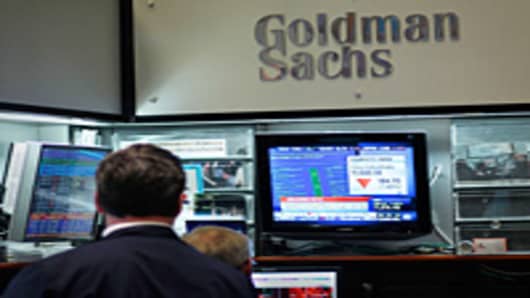
The Goldman Sachs booth on the floor of the New York Stock Exchange
Getty Images
The Goldman Sachs booth on the floor of the New York Stock Exchange

The two sides are still far apart. Goldman Sachs is unwilling to enter into the typical Wall Street settlement—paying a fine and agreeing not to commit further violations, while neither admitting nor denying the accusations—because it insists on denying that it intentionally committed fraud, sources familiar with the matter say. The SEC has accused Goldman of fraud under both the Securities Act of 1933 and Exchange Act of 1934 and is unwilling to abandon those claims for lesser offenses, those sources say.

Goldman is wary of settling any case while the accusation of fraud is outstanding. Part of this wariness is rooted in the reputational damage that could come from seeming to give up resisting the fraud accusation. More importantly, the company is concerned about the host of private class-action lawsuits that would surely follow any SEC settlement.

The SEC, however, cannot afford to be seen going easy on Goldman. It has managed to avoid having its authority stripped away in the financial reform process—the bills passed by both the House and the Senate largely keep the SEC independent and its authority intact—but it has been stung by criticism that lax enforcement of securities laws contributed to the financial crisis.

Despite this gap between the SEC and Goldman [GS  Loading...      ()   ], a compromise position might not be completely out of reach. A technical legal difference in the fraud sections of the Securities Act and Exchange Act may allow both the SEC and Goldman to walk away happy.

The SEC accused Goldman with violating Section 10(b) of the Exchange Act and Section 17(a) of the Securities Act. Both are anti-fraud provisions. Like most anti-fraud statutes, Section 10(b) requires the government to prove a fraudulent intent. The first subsection of Section 17(a) also requires proof of fraudulent intent. But the second and third subsections of 17(a) do not require any proof of intent to defraud. This makes accusations based on the second and third subsections much easier to prove—and perhaps easier for Goldman to stomach.

In fact, subsection 17(a)(2) does not even employ any form of the word “fraud” or “deceit.” It makes the sale of a security or a derivative unlawful if a material omission renders the sale merely “misleading.”

The SEC’s claim against Goldman based on this subsection is its strongest and easiest to prove.

Goldman might accept a settlement if the civil charges requiring fraudulent intent or claiming a scheme that operated as fraud were dropped, a source said. That would leave open the charge of merely negligently “misleading” the investors in the Abacus deal. A source close to the matter indicated that this would be far more palatable to the company since it does not explicitly implicate Goldman in fraud.

The SEC has recently shown a willingness to cut this kind of deal. In February, the SEC settled a backdating case against Michael Byrd, the former CFO and later COO of Brocade Communications Systems, Inc.

Initially, the SEC had charged Byrd with violating both Section 10(b) and Section 17(a). In the settlement, the Section 10(b) charges were dropped, as was any charge based on the first part of Section 17(a).

The only surviving allegations--including a number of charges not involved in the Goldman case--were those that do not require proof of fraudulent intent. An earlier Brocade backdating settlement followed a similar pattern.

When it comes to the Goldman case, however, the SEC is playing its cards very close to its vest. It surprised Goldman by filing the lawsuit without pursuing further settlement negotiations. And virtually nothing about the settlement terms it is seeking have leaked out to the media.

Importantly for Goldman, most federal courts hold that Section 17(a) does not give rise to private actions. This means that Goldman would not be making itself more vulnerable to class-action lawsuits from outside investors even if it actually admitted to the charge of misleading omissions in the Abacus deal. Only the SEC is empowered to bring suit under Section 17(a).

The extent of Goldman’s monetary liability will not necessarily be affected by the exact charge it settles. So Goldman could still wind up paying a huge fine—some have estimated the fine could amount to $1 billion, the highest ever paid by a single firm. But if Goldman could avoid copping a plea to fraud, while perhaps limiting its vulnerability to class action investor lawsuits, it would likely agree to a deal.

Goldman does not seem confident that a deal will definitely be reached. As CNBC.com reported last week, sources say Goldman is still preparing a full-fledged defense even as talks with the SEC continue. The firm has been posturing behind the scenes, indicating that it believes it could uncover weaknesses in the government’s case during the pre-trial discovery phase. But it would prefer a settlement that dropped the fraud charges under the terms outlined above, sources say.

More from John Carney:

© 2011 CNBC.com

CNBC HIGHLIGHTS

  • ETF Strategist | Fixed income
  • The economy is heating up but the Fed isn’t letting up. How do you play the fixed-income market?
  • With its rich oil reserves and rampant corruption, Azerbaijan poses a dilemma for U.S. policy makers.
  • Business owners should occasionally consider giving their work for free. Here are several reasons why.
  • Chris Christie and Warren Buffett
  • GOP Governor Chris Christie wants Warren Buffett to stop talking about higher taxes on the super-rich.
  • London Olympic Rental
  • There’s a shortage of hotel rooms in London for the Olympics, so many locals are renting out their opulent private homes.
  • Boston Beer will be creating a special commemorative brew, the Samuel Adams Boston 26.2, to mark this year's Boston Marathon.


Current DateTime: 01:18:34 22 Feb 2012
LinksList Documentid: 29778428

Current DateTime: 03:38:30 22 Feb 2012
LinksList Documentid: 29779196

Current DateTime: 12:30:55 22 Feb 2012
LinksList Documentid: 29779197

Current DateTime: 01:29:53 22 Feb 2012
LinksList Documentid: 29779199
CNBCCNBC
About CNBC  |  Site Map  |  Video Reprints   |  Advertise  |  Help  |  Contact
Privacy Policy  |     |  Terms of Service  |  Independent Programming Report
  Data is a real-time snapshot  *Data is delayed at least 15 minutes
Global Business and Financial News, Stock Quotes, and Market Data and Analysis

© 2012 CNBC LLC.  All Rights Reserved.
A Division of NBCUniversal
Thomson ReutersThomson Reuters