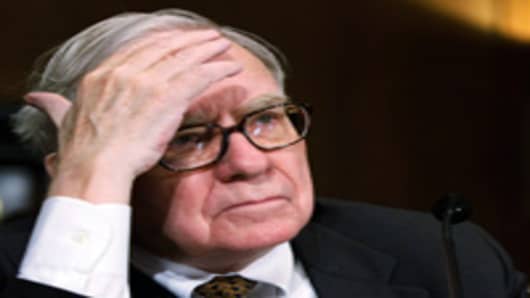
It would be unfair to Buffett to wonder if he is just talking his book here. Although competition between ratings agencies might damage his stake in Moody’s—remember, it was duopoly pricing power that attracted him in the first place—it’s safer to assume that he is genuinely worried about competition between ratings agencies leading to further laxity.
Why would Buffett assume that competition would lead to laxity? In part, it’s because he is viewing it from the perspective of a bond issuer. Obviously, a bond issuer would prefer to be rated by someone who would give his company a higher rating, regardless of the soundness of the business. So if competition were merely about agencies competing for business from issuers, quality might decline.
But this ignores the perspective of the bond buyer, who would prefer to buy bonds rated by the agency with the highest quality ratings.
Genuine competition would involve agencies that would have to balance their relationships with issuers with their reputations with buyers.
Bond issuers who chose trashy ratings agencies that gave junk the glitter of gold would have a hard time selling their debt. Under our current system, however, many bond buyers cannot choose to buy bonds that do not get rated by S&P or Moody’s.
Take a look at the way equity research now operates. Divorced for years now from piggy-backing on investment banking, equity research must compete the way every normal business competes—on price, speed, and on quality of the product.
Some equity analysts may sacrifice quality of research for access to the companies they cover. Indeed, the disparity between the number of sell ratings and the number of buy ratings suggests that many analysts are doing this.
But they suffer because many investors just choose to ignore the professional analysts or do the analysis themselves. Meanwhile, some star analysts who are willing to put quality first, are able to rise to the top of their field. Does the name Meredith Whitney ring a bell?
Nothing like this is permitted to occur in the bond market. Many of the buyers of bonds are large institutions that are legally obligated in one way or another to accept the views of the ratings agencies. Get rid of this obligation, and the agencies would have to compete on quality.
Already, there exist a few companies that are providing opinions about credit quality without seeking a special dispensation from the government. But they are hampered by regulations that make the views of ratings agencies sacrosanct. Why not try a free market for credit ratings?
The current system of regulations actually benefits a few of the bond buyers who are not legally obliged to outsource risk management and investment decisions to ratings agencies. Hedge funds, for instance, can profit from regulation-driven laxity in ratings by spotting misrated products. Buffett himself confessed to doing exactly this kind of thing himself.
“What we really hope for is misrated securities, because that will give us a chance to turn a profit if we disagree with how the agencies rate them,” Buffett told the Commission.
Got that? The same Buffett who profits from the duopoly status of the top ratings agencies also profits from the mistakes allowed to fester under our anti-competitive system. Perhaps we should think twice before anointing him our oracle when it comes to ratings agency reform.
More from John Carney: