

Austerity measures imposed by the euro zone will likely push the euro back towards $1.50 or even $1.60 but the European currency is unlikely to achieve the status of reserve currency, economist Warren Mosler, founder and principal of broker/dealer AVM, told CNBC.com Friday.
AP
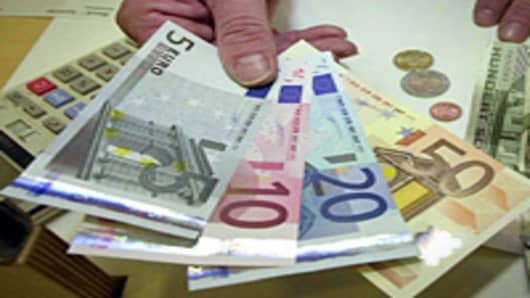
Euro bills in hand
The euro has fallen sharply versus the dollar since the euro zone's sovereign debt worries began, with many analysts predicting it will slide to parity with the greenback or even below.
But Mosler thinks the recent plunge has been caused by portfolio adjustments – investors shifting assets from euros to gold or dollars – and that this trend is nearly over.
Rising taxes and spending cuts, pledged by governments in the single European currency area to cut debt, are "like a crop failure" because they will decrease the amount of euros available, he said.
"Everything they do in the euro zone is highly deflationary," Mosler told CNBC.com in a telephone interview.
"I think there's a very good chance the euro would be stronger because of the austerity measures; this can very easily get it back to $1.50-$1.60," he added.
To keep the euro down, the ECB would have to buy dollars but "ideologically, that would mean they're accumulating dollar reserves," which the European Union does not want, Mosler said.
The euro is unlikely to become a global reserve currency because the EU's economic policy is geared towards growth based on exports and the euro zone is running a surplus, he explained.
"The only way the rest of the world will hold your currency is if you run a trade deficit," he said. "Economics is the opposite of religion, it's better to receive than to give."
The ECB Could End the Debt Crisis
The European Central Bank could easily appease the fears of default which have plagued markets regarding by creating money and giving it to its members, Mosler said.
The ECB, "if it wants to credit any nation, it can," he added. "The ECB could make a distribution of, say, 10 percent of GDP to each member. The ECB can just credit the accounts of the member nations based on how many people they have. That would reduce all debt ratios this year by 10 percent."
The measure would not contradict EU anti-bailout rules, since the money would be distributed equally among members and if the cash is used to cover the deficit would not be inflationary, Mosler added.

The European Debt Crisis - See Complete Coverage
"My proposal is to put the ECB in a position where governments become dependent of checks from the ECB," he said. "Operationally, it's very simple to do, you just credit their accounts. The Finance Ministers would direct the money."
The central bank could make this an annual distribution, and attach financial discipline conditions to it, such as respecting the EU's Stability and Growth Pact.
The country that does not respect the pact does not get the money, making it a more powerful enforcement mechanism and helping fight speculators at the same time, he explained.