

There are no visible picket signs on Wall Street. The U.S. stock market—the world's biggest when measured by the market value of the companies that trade here—still opens for business every trading day. And the 6 o'clock news still lets everyone know if the Dow finishes the day up or down.
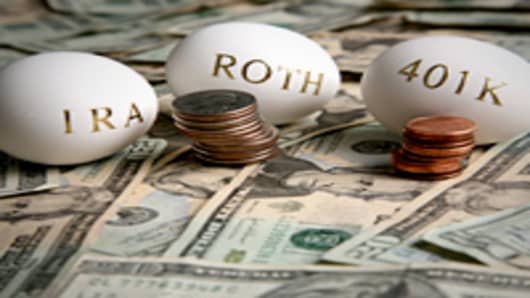
Yet, increasingly, investors on Main Street are not playing the stock market game with confidence like they used to, mainly because the game of making money has gotten tougher and more volatile since the financial crisis. Retail investors are buying fewer stocks. They are paring back on stocks and stock funds they already own. Instead, they're moving into safer investments, like cash and bonds.
"Investors are on strike," says Axel Merk, president and chief investment officer at Merk Mutual Funds.
The fear on Wall Street is that this buyer's strike will linger for years, resulting in a lost generation of investors similar to what occurred after steep stock declines in the 1930s during the Great Depression and early 1970s, a recessionary time punctuated by high inflation.
Consider Stacy Harris, 58, from Nashville. While she's not totally out of the stock market, her cash stash has ballooned to 42 percent of her portfolio. That's twice as big as her slimmed-down stock holdings, now just 21 percent of her investment pie.
"I'm sitting on an uncomfortable amount of cash," says Harris, editor of Stacy's Music Row Report, an online publication that blogs about the country music scene. "Until things get better, I'm not putting any more money into stocks."
Another member of the shaken-investor class is Bill Woodward of Pittsburgh. He was once an avid stock investor. A decade ago, he used to troll stock chat rooms on the Internet in search of hot stocks. Now, his portfolio is down to three holdings: a dividend-paying oil tanker company, a fund that bets against the real estate market and a penny stock he calls his "lottery ticket."

USA Today
He couldn't care less about the nearly 5,000 other stocks that trade on major U.S. exchanges. "I have no interest in coming back," says Woodward, 60, who works at a local employment center that helps people find jobs. His distrust of market regulators and his belief that they don't protect individual investors are the top reasons for his anti-stock stance.
It's Hip to be Conservative
After back-to-back stock market busts in a 10-year span in the 2000s, cocktail party chatter that once centered around get-rich-quick stocks has given way to sober chats about ways to reduce risk, the best places to stash cash and why it makes sense to buy boring bonds instead of sexy stocks. Days like Wednesday, when the Dow skyrocketed 255 points, are offset by months like August, when the Dow suffered its worst August drop since 2001.
Yanking cash out of the stock market for fear of losing it has been the trade of choice for Main Street investors since the start of 2009, when the fallout from the financial crisis made it clear stock prices don't always go up.
"The lost generation is not coming back," says Michael Panzner, who writes the blog Financial Armageddon.
Recent statistics paint a picture of retail investors in retreat. Nothing illustrates Main Street investors' diminished appetite for stocks more than the dollars flowing in and out of mutual funds. Since the beginning of 2008, stock mutual funds have suffered cash outflows totaling roughly $245 billion.
In contrast, bond mutual funds have enjoyed inflows of close to $616 billion, according to data from the Investment Company Institute, a mutual fund industry trade group. Similarly, prior to the financial meltdown two years ago, 401(k) investors had seven of every 10 dollars of their retirement money invested in stocks, but that is back below 60%, according to Hewitt Associates.
Anti-stock sentiment is also evident in the soon-to-be-released 2010 Scottrade American Investor Study. While 73 percent said they still believe the stock market will produce long-term gains, 65 percent of investors polled said they were "very" or "somewhat stressed" about their current financial situation. The "economy" was the No. 1 source of that stress.
Nearly one of three investors (31 percent) said they were "investing less money" or "investing more conservatively." The most conservative investors of all: Gen Y (18 to 28 years old) and Gen Xers (29-45), the study found.
Bad Times for Stocks
It's hard to blame individual investors for their growing skittishness toward stocks. They've endured not one but two of the worst stock market downturns in history—within a short 10-year span. The dot-com-inspired stock bubble burst in early 2000, knocking the broad stock market, as measured by the Standard & Poor's 500-stock index, down 49.1 percent by the time the bear market ended in 2002. That was followed by the 56.8 percentplunge from 2007-09, when a credit-driven bubble in stocks, real estate and many other assets ended badly.
As a result of the back-to-back bear markets, the Dow Jones industrial average is still trading just 270 points above the 10,000 level, a milestone it first attained to great fanfare back in 1999. Since the Oct. 9, 2007, high, the stock market's value has declined by $5.6 trillion, according to Wilshire Associates. "Investors are saying, 'Why would I want to put money into stocks? I'm still losing money,' " says Charles Biderman, director of research at TrimTabs, a firm that tracks fund cash flows.
Panzner ticks off three other key reasons Main Street investors have suddenly turned very risk-averse:
- Investors are trying to make sense of an unprecedented economic earthquake that has left them feeling blindsided and unsure about their economic futures like never before. Nearly 15 million are unemployed, and many have seen the value of their homes — typically their biggest investment — crater.
- There is a feeling among investors, Panzner says, that the investment "game is rigged" in favor of professional traders and money managers. The belief that the playing field is not level has created intense feelings of animosity toward Wall Street.
- The aging of the Baby Boomers has created a demographic headwind for the stock market.
"More people will be looking to draw down their savings," Panzner says. "As people get older, they will want to take less risk and protect their nest eggs."
And there's no guarantee that stocks will rebound strongly after major bear markets, as they have tended to do in the past. "Markets don't always go up," Merk warns. For proof, he points to the Nikkei 225, Japan's main blue-chip stock index.The index peaked on Dec. 29, 1989, at 38,915.87 before a multiyear asset bubble burst. On Wednesday, more than 20 years later, the Nikkei closed at 8927.02 — 77.1 percent below its record high.
Fears of another super swoon are what keep Ron Munn, a 69-year-old retiree from Green Valley, Ariz., up at night.
"As part of the 'Lost Generation,' now is certainly not the time to jump back in the market and possibly become part of the 'Gone Forever Generation,' " Munn says in an e-mail. "Keeping your powder dry with safe cash and bond investments makes sense under the current economic and political situation."
What Will Get Investors Back?
Despite all the doom and gloom, not everyone on Wall Street believes that investors will stay away from the stock marketfor years, if not decades.
"A lost generation? I don't buy it," says Jim Paulsen, chief investment strategist at Wells Capital Management. He says investors always say they hate stocks and that they "don't want to touch a stock" after a sharp downdraft. They said it after the 1973-74 bear market, they said it after the dot-com crash and they are saying it now. "I've heard this all before," he says.
Five Keys to Bring Investors Back to Stocks
What will bring the Main Street masses back to Wall Street?
- Jobs. When hiring picks up, so will consumer and investor confidence. With that will come higher stock prices, Paulsen says.
"At this point we have ourselves in such a panic that the only tonic to calm mind-sets is you will need two, three and even four months in a row of 200,000-plus jobs created," Paulsen says. "If we get that, you could see a fairly violent move up in interest rates and stocks. But if jobs don't show, the depression mentality is going to grow."
- A new bull market. Animal spirits will return when the stock market starts heading higher and your neighbor starts bragging about all the money she made in the market, says Michael Farr of money management firm Farr Miller & Washington. More days like Wednesday, when stocks soared 3 percent, are needed.
Thinkstock | Comstock Images | Getty Images
Financial section of newspaper
"We need a bull market somewhere in something," Farr says. "As soon as the guy next door is making a buck, investors' curiosity will be piqued," and they will regain their courage and start investing in stocks again.
To drive home his point, he uses a casino analogy: "The reason slot machines have ringing bells and flashing lights" to announce a winner is that it "keeps everyone else pulling their handles. You don't have to be the one that wins, you just have to know someone is winning."
- Clarity over government policy. All the question marks on government policy, ranging from taxes to financial regulation, are stifling business decision-making and innovation, Merk argues.
"A key ingredient to functioning markets is clarity," Merk says. "You need to know what the government is up to. But we just don't have that. Investors will come back to the business of investing when investment can take place based on analysis of businesses, rather than anticipating the next government intervention."
- A resurgence of dividends. In a world where yield or income is gaining popularity at the same time that yields on government bonds are sinking to or near record lows, investors will be more apt to return to stocks if companies upped their dividend payouts, argues Jason Trennert of Strategas Research Partners.
"Retail investors have been traumatized by two 50 percent declines in stocks in the past 10 years, serial misdeeds on the part of Corporate America and Wall Street, and for anyone left, the flash crash," he says. "I've come to the conclusion that only dividends could immediately restore some confidence on the part of the investing public in stocks."
USA Today
Keeping the Bush top tax rate for dividends at 15 percent instead of letting it expire at the end of the year and taxing dividends at a higher rate, would also give investors a reason to stay invested, adds Edward Yardeni of Yardeni Research.
- Single-digit P-Es. It might take a scary stock market swoon that knocks the price-to-earnings ratio back to single-digits to create a truly good entry point for investors, Panzner warns. In prior bear markets, stocks bottomed out in October 1974 at a P-E of 7 and in August 1982 at less than 8, InvesTech Research data show.
Both lows set the market up for big gains over multiyear periods, including the 18-year bull run from 1982 to 2000. The S&P 500's current P-E, based on projected earnings over the next four quarters, is 12.7, according to Thomson Reuters. The long-term P-E is roughly 15.
Getting back to single-digit P-Es is "the best prospect for getting a sustainable recovery," Panzner says. "Stocks have to get so cheap, so washed out and so hated," the only direction is up.
There's one more thing investors like Harris and Woodward would like to see before they would feel comfortable investing aggressively in stocks again: a stiff crackdown by the Securities and Exchange Commission on unscrupulous Wall Street types that prey on individual investors.
Says Woodward: "What would bring me back? Show me that the SEC is back to protecting the little guy."
Adds Harris: "I don't think we want to be in a position again where we have a guy like Bernie Madoff."Madoff orchestrated the biggest Ponzi scheme in history, robbing the financial futures of countless people.
For now, "Everyone is thinking more conservatively," Harris says. "They want to make sure their money is there when they need it."