Skip navigation

Realty Check

#DIANAOLICK ON TWITTER


Current DateTime: 01:40:15 23 Feb 2012
LinksList Documentid: 23279692
Expiration DateTime: 2/23/2012 1:42:52 AM

Current DateTime: 01:40:15 23 Feb 2012
LinksList Documentid: 35933407
  • The 10 Emptiest US Cities

      It’s no secret that the U.S. housing market has seen better days. So, what are the emptiest major U.S. cities?

  • Most Expensive States

      Your dollar won't get as far in these ten states. Which states are the most expensive to live in?

  • Inspired Homes

      From the Simpsons TV show, to the White House to Snow White, here are homes inspired by others.

MOST SHARED


Current DateTime: 01:40:15 23 Feb 2012
LinksList Documentid: 31330905
Expiration DateTime: 2/23/2012 1:42:45 AM

Current DateTime: 01:40:16 23 Feb 2012
LinksList Documentid: 23452000
Expiration DateTime: 2/23/2012 1:42:40 AM

Current DateTime: 01:40:16 23 Feb 2012
LinksList Documentid: 23452764
Expiration DateTime: 2/23/2012 1:42:24 AM

REALTY CHECK VIDEO

» More

Current DateTime: 01:40:17 23 Feb 2012
LinksList Documentid: 30871294
Expiration DateTime: 2/23/2012 1:42:34 AM

RSS FEED

» Help

Current DateTime: 01:40:18 23 Feb 2012
LinksList Documentid: 30871303

National Home Prices Double Dip

Published: Thursday, 5 May 2011 | 12:02 AM ET
Text Size
By: Diana Olick
CNBC Real Estate Reporter

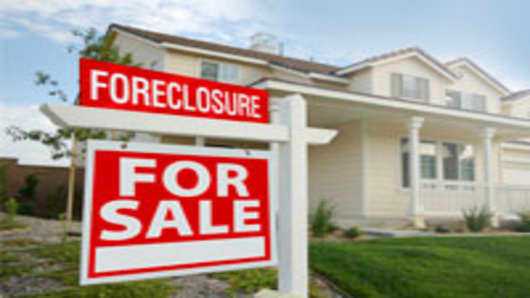
Foreclosure

It's official.

Home prices have double dipped nationwide, now lower than their March 2009 trough, according to a new report from Clear Capital.

It was inevitable, and it was predicted (by me for sure) that a surge in sales of foreclosed properties and a big push by banks to facilitate short sales would force home prices down dramatically.

Sales of bank-owned (REO) properties hit 34.5 percent of the market, according to the survey, resulting in a national price drop of 4.9 percent quarterly and 5 percent year-over-year. National home prices have fallen 11.5 percent in the past nine months, a rate not seen since 2008. Add short sales, where the bank allows the borrower to sell for less than the value of the mortgage, and prices have nowhere to go but down.

"With more than one-third of national home sales being REO (bank owned), market prices are being weighed down as many markets have not regained enough footing to withstand the strain of the high proportion of REO sales," says Clear Capital's Alex Villacorta.

You don't have to tell Los Angeles Realtor Bill Kerbox any of this. LA prices had been improving, and LA is still one of the nation's best performing metro markets right now. Recently, however, prices took a turn, now down 2.4 percent quarter to quarter thanks to 34 percent REO saturation.

"We have definitely seen a number of both short sales and foreclosed properties along the West Side here, and they have definitely taken a hit," bemoans Kerbox. "It hurts to have a very low comp pop up next to your beautiful new home."

While the usual subprime mortgage suspects, like California, Arizona, Florida and Nevada used to rule the foreclosure roost and still have high volumes of distressed properties, the mid-west is seeing a surge in REOs now, thanks to the plain old recession. 40 percent of the Chicago market is foreclosures, 43 percent in Cleveland and 51 percent in Minneapolis. Home prices fell 8.7 percent in the Mid-West during the past three months compared to the previous quarter.

While the foreclosure crisis is abating on the front end, with fewer loans going newly delinquent, the pipeline of seriously delinquent loans is enormous. Banks are now ramping up the foreclosure process after the "robo-signing" paperwork scandal, but at their current pace it would take about four years to process all the bad loans through foreclosure and even longer to sell those homes out on the open market.

While buyer demand is rising, thanks to a slowly improving jobs picture, mortgage availability is still very difficult for the low to middle-income borrower, and falling prices don't help already weak consumer confidence in the housing market. If prices continue to fall further, which they likely will in the short term, the number of so-called "underwater" borrowers, those with negative equity, will rise even higher, which could in turn result in more loan delinquencies.

Nationwide more than a quarter of all homeowners with a mortgage are in a negative equity position, but in some markets, that number is far higher. 46 percent of Massachusetts borrowers are underwater, according to LendingTree.

The last time home prices fell at this rate, three years ago, they were then boosted by government stimulus in the form of a home buyer tax credit. "A note of caution to those looking for a strong end to 2011: The last time no incentives were in place and distressed inventories were this high, home prices fell sharply," warns Villacorta.

RELATED LINKS

Questions?  Comments?  And follow me on Twitter @Diana_Olick

© 2012 CNBC.com


Current DateTime: 01:25:37 23 Feb 2012
LinksList Documentid: 29778428

Current DateTime: 03:38:29 22 Feb 2012
LinksList Documentid: 29779196

Current DateTime: 12:30:56 22 Feb 2012
LinksList Documentid: 29779197

Current DateTime: 11:00:30 22 Feb 2012
LinksList Documentid: 29779199
CNBCCNBC
About CNBC  |  Site Map  |  Video Reprints   |  Advertise  |  Help  |  Contact
Privacy Policy  |     |  Terms of Service  |  Independent Programming Report
  Data is a real-time snapshot  *Data is delayed at least 15 minutes
Global Business and Financial News, Stock Quotes, and Market Data and Analysis

© 2012 CNBC LLC.  All Rights Reserved.
A Division of NBCUniversal
Thomson ReutersThomson Reuters