

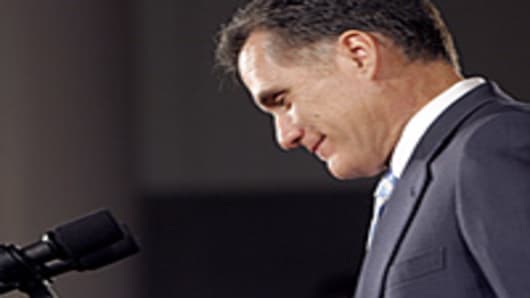
Mitt Romney has yet to make an impression on the Oval Office's upholstery, but he's left a mark on your pizza, office and bed.
AP
While much of Romney's presidential campaign will focus on his executive experience in the Massachusetts statehouse, the former Bay State governor and GOP presidential hopeful's calls as co-founder of Bain Capital have had a much bigger impact on the American consumer so far.
The venture-capital-turned-leveraged-buyout firm helped fund Romney's personal fortune, believed to be between $190 million and $300 million, and provided $45 million of the $110 million he spent on his unsuccessful 2008 presidential run.
Sometimes the calls didn't quite work out, as was the case when Bain Capital and then-aspiring Senate candidate Romney bought American Pad & Paper Co. for $5 million in 1992. Bain charged Ampad advisory fees, used it to buy a few other office-supply makers and ran the company's debt from $11 million in 1993 to nearly $400 million in 1999.
Meanwhile, it acquired an Ampad plant in Marion, Ill., in 1994 and shuttered the 200-worker facility the next year after workers held a strike over layoffs and pay cuts.
The labor strife was used against Romney by Sen. Edward M. Kennedy in the 1994 race for Kennedy's Senate seat and, though Romney gave Kennedy the toughest contest of his career, Romney lost by 18 points.
The subsequent closing of a 185-worker Ampad plant in Buffalo, N.Y., despite a $50 million public stock offering only three years earlier (and Ampad's ensuing bankruptcy in 2000 and liquidation in 2001) made that transaction one of Romney's few regrets during the Bain years and the kind of thing he told The New York Times he would "be more sensitive" about if he could do it over again — despite helping himself and Bain investors pocket $100 million from the deal.
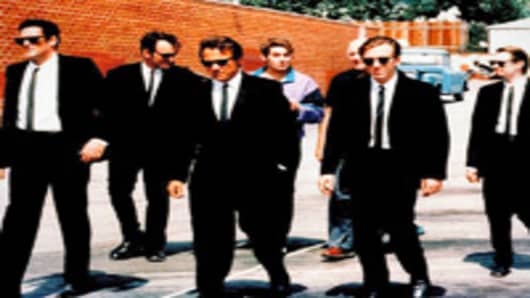
"When Bain bought film studio Artisan Entertainment, Romney refused to involve himself in the deal because the studio had produced R-rated films including Quentin Tarantino's 'Reservoir Dogs.'""
When Romney's Bain decisions worked out, however, they did so in a big way. Back in 1986, the co-founder of a little office supply store in Boston's Brighton neighborhood went to Romney and convinced him there was a lot of money to be made selling desk chairs, copier paper and toner. Bain invested $2 million in the store that later became the Staples chain and got $13 million in return for its troubles. Today, Staples has an $11.8 billion market cap and looks like the best investment anyone's ever made in printer ink.
TheStreet took a look at Bain Capital's Romney-era investments and came up with five that had the biggest impact on American consumers. They may not say much about Romney as a candidate, but they're big, logo-laden signs of who he is as an investor and how he connects with the American buying public:
Staples
As mentioned earlier, Romney and Bain invested in Staples in Bain's heady early days when venture capital was its weapon of choice and leveraged acquisitions weren't anybody's idea of a good time. It didn't make that investment any less wise or the moves that followed any less indicative of Staples' influence on future endeavors.
Staples Store
Romney and Bain landed this first big success when Staples co-founder Thomas Stemberg bent Romney's ear a quarter-century ago and told him about the growth potential for office supplies.
Stemberg himself was so convinced of it that he and partner Leo Kahn — who each ran grocery chains in the Boston area and had been battling each other for the cheapest price on a Thanksgiving turkey just a year before — focused their attention on dropping the price of $3 pack of pens that sold at wholesale for 10% of that cost.
Bain and Romney saw a $13 million return on their $2 million investment and last year saw Staples bring in $24.5 billion in sales and employ roughly 90,000 people worldwide. That initial gain was enough to bring Bain and Romney back to office supplies again when they leveraged the Ampad buyout in 1992.
The result didn't turn out nearly so well for Ampad or its employees, but Bain's multimillion-dollar windfall from the deal displayed Romney's penchant for finding growth potential and capitalizing on it.
The Sports Authority
When one good idea pays off, why not do it again?
Just as there was little call for a local stationery store the size of a hangar when Staples opened in 1986, sports stores weren't much beyond mom-and-pop stores and regional mall- and strip-mall-based chains in 1987, when former Herman's World of Sporting Goods CEO Jack Smith pitched Romney, Bain and several other backers on the idea of a sporting-goods mega store roughly the size of a small arena.
He'd failed at it with Herman's, but Bain and other venture capital partners saw a big box full of potential in Smith's idea and helped him open nine such stores in six states by 1990.
Unfortunately for Smith, he hadn't made a profit off any of them at the time. Fortunately for Romney and Bain, the folks at Kmart didn't care and bought the chain for $75 million.
Though Sports Authority would eventually grow to more than 460 stores in 45 states and a number of licensed stores in Japan, the investment would never work out for Kmart, which sold off Sports Authority in 1994 after closing several of its own stores. Within eight years, Kmart would be bankrupt and Sports Authority would be thriving.
Though chains such as East Coast-based Dick's Sporting Goods would become just as successful and prolific through the use of the same model, The Sports Authority is an example of just what a well-funded bit of American ingenuity can accomplish if given the chance.
Brookstone
The Sharper Image went from a gadget store to a logo on iPod docks, shavers and luggage found at Macy's , JCPenney and Bed, Bath & Beyond . Brookstone morphed from a gadget store competing with the Sharper Image to one competing with high-end Hammacher Schlemmer and its $13,000 motorized monocycle. Guess who did something right?
When Romney and Bain took over Brookstone in 1991, it wasn't to change the products but to change the model for selling them: Brookstone was relying largely on stores and catalogs to sell other manufacturers' Swiss Army knives and gadgets.
Romney and Bain replaced Brookstone's CEO in 1993, began shifting the balance of stock to Brookstone-branded items, making the store and catalog lineups look more alike and adding store-exclusive items to drive traffic.
The store added kiosks in malls that already had Brookstone outlets and began shifting more catalog content onto its website in 1996. By 2000, more than 60% of Brookstone's sales came from its home-branded products. The focus shifted from gifts to somewhat more practical items such as hair dryers and barbecue forks.
That approach drove revenue, kept the customers coming and, eventually, helped Brookstone survive while Sharper Image declared bankruptcy.
Today, Brookstone still has 300 stores but relies on that same multipronged approach of Web and catalog service to not only stay afloat but to boost sales 8.8% and push same-store sales 6.7% last year.
Those tweaks made during the Bain years didn't always hold, as Brookstone saw big declines in 2009, but they set a template for how the company could survive a changing climate, streamline and remain relevant — if only somewhat less indebted.
Doing the same to certain elements of the federal government, if not the whole thing, seems like a prerequisite for any serious GOP candidate.
Sealy
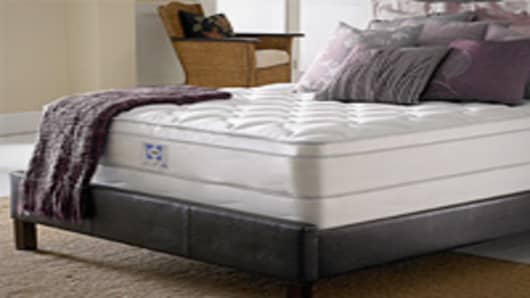
Sometimes you just want a nice, stable place to rest your head at night. For many years, regardless of its mattress quality, Sealy was not that place.
The 130-year-old company fought off bankruptcy during the Great Depression, went through its first leveraged buyout in 1989 and eventually was bought out by Romney, Bain and Sealy's executive team in 1997.
The company already had a 23% share of the $4 billion mattress market and Bain looked to solidify that position by going with a "lean" manufacturing process that makes all parts of the mattress in a constant flow rather than in batches, producing only the number customers order and slicing inventory.
Source: Sealy
The company redesigned its core mattress, focused on the high end and watched earnings jump to $168 million from $112 million in three years.
Bain made back more than five times its initial $830 million investment when it sold Sealy to KKR in 2004, but Sealy went into its 2006 IPO as a company ahead of its time.
When the recession hit in 2009, Sealy's "lean" approach kept it from having a ton of increasingly worthless inventory laying around and protected it from the losses beseting competitors such as Simmons, which found itself leveraged to the hilt and filed for Chapter 11 bankruptcy in late 2009.
Instead of laying off its nearly 5,000 full-time workers at 25 bedding plants, Sealy was able to get by through attrition and the trimming of its temporary work force.
If an aspiring politician can not only protect an American institution in the short term but recession-proof it for the years that follow, that's not a bad scenario to be caught in bed with.
Dominos Pizza
Domino's had only one owner before Romney and Bain bought 93% of the company in 1998, and Tom Monaghan knew how to play to a conservative base.
Domino's Pizza
Monaghan has used a large slice of his pizza profits to support the Catholic Church and fund various forms of Catholic philanthropy, including his Thomas More Law Center, Ave Maria Foundation, Ave Maria Mutual Fund Catholic investments, Ave Maria University and School of Law in Florida and the Catholic-minded town of Ave Maria, Fla.
Monaghan's views are in line with those of the church and have been unwaveringly anti-abortion, anti-gay marriage and anti-secular since owning the pizza chain; his money has helped push for like-minded candidates and Supreme Court justices.
Romney hasn't always shared Monaghan's views — he was pro-choice until 2005 — and showed no signs that they played a role in the buyout, but having more than a pizza company as a similar interest doesn't hurt Romney's conservative credentials.
Installing David Brandon as chain CEO wasn't a shabby move either, as Brandon oversaw the Domino's IPO in 2004, tweaked the company's ordering system with online ordering and a "pizza tracker" and set into motion the 2009 pizza revamp that helped boost revenues 11.9%, to $1.6 billion.
Though Romney left Bain in 1999 and was well out of the picture by the time any of this took place, he showed the ability to appoint personnel who could help bring about change and make deals with partners reflecting the values of his key constituencies.
Source: Miramax
Reservoir Dogs
That last part's especially important, since Romney's early pro-choice stance didn't keep his values from dictating certain business decisions.
When Bain bought film studio Artisan Entertainment in the late 1990s, Romney refused to involved himself in the deal because the studio had produced R-rated films including Quentin Tarantino's “Reservoir Dogs.”
Though Artisan would produce the first Christian-themed “VeggieTales” through its Family Home Entertainment label before being bought out by Lionsgate Films in 2004, Reservoir Dogs' notorious scenes of intense violence — such as gangster character "Mr. Blonde" hacking a cop's ear off — didn't pass the Romney test.
______________________________
Disclosures:
TheStreet's editorial policy prohibits staff editors, reporters and analysts from holding positions in any individual stocks.
______________________________
CNBC Data Pages:
______________________________