

The biggest risk brought on by the euro debt crisis is "Balkanization" – the fragmentation of economic interests according to narrow, mainly national criteria, UK Chancellor George Osborne told CNBC Friday.
Getty Images
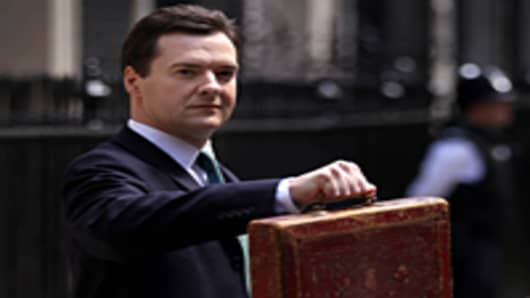
Chancellor of the Exchequer George Osborne holds Disraeli's original budget box as he leaves 11 Downing Street for Parliament.
"I think the big risk with the euro crisis - and you saw this last year and [it's] one of the reasons it is so damaging to the world - is that you get… Balkanization," Osborne said in an interview at the World Economic Forum in Davos.
"You know, French business being done in France and French assets being matched against French liabilities, German assets against German liabilities rather than a single currency zone and a single market as people try to protect their assets. That's something that we want to see avoided," he added.
The Chancellor reiterated that the euro zone needs to boost the capabilities of its rescue funds before international lenders can commit to supporting it further in sorting out the debt crisis.
His remarks echo those of U.S. Treasury Secretary Timothy Geithner, who called for "a stronger firewall" for Europe in his address to the World Economic Forum.
"When it comes to resources to the euro zone crisis, they created a firewall, they need to put more money in that," Osborne said.
"If we see more from the euro zone, much of the rest of the world is going to be willing to put more resources into the IMF," he added.
'Collateral Damage'
Greece is reportedly close to reaching a deal with private sector creditors on the losses they are prepared to take on their debt, with European Union monetary affairs commissioner Olli Rehn saying earlier on Friday that an agreement could be reached within the next three days.
"We've got to see a sustainable Greek debt situation," said Osborne, who ruled out the possibility of a messy default by Greece.
"I think they can resolve this in a voluntary way and that's clearly what their plan is," he said.
The UK, which was nearing a double-dip recession after its economy shrank by 0.2 percent in the fourth quarter of the year, was hit by the crisis in the euro zone.
"The best thing that would help the British economy now would be a resolution of the euro zone debt crisis," Osborne said.
"We are suffering collateral damage from the euro zone like the others… 40 percent of our exports are to the euro zone," he said, pointing out that one component of gross domestic product worst affected was manufactured goods sold to the single currency area.
However, recent falls in inflation are encouraging, he said, adding that the government will try to avoid further rises in unemployment.
A series of tax breaks that will be introduced over the next two months will make the UK "one of the most attractive countries for business," according to Osborne.
"The best thing we can do is inject confidence in the UK economy," he said.
Yields on UK government bonds, also known as gilts, have fallen as many investors perceive the country as less risky than many in the single currency zone. Osborne said he wasn't worried about safe haven status.
"It's better to be a safe haven than the opposite," he said, adding that the low yields were a sign of confidence in Britain.