Realty Check
#DIANAOLICK ON TWITTER
- Under Pressure, FHA Skews to Wealthier Home Buyers
- Huge Spike in Home Prices Is Not Real
- Investor Caution: Beware of Heat in Distressed Housing
- Foreclosures Move East as Hardest-Hit Markets Clear
- Foreclosures Fall...And That's a Bad Thing?
- After a Dip, Homebuilder Sentiment Surges Again
- Obama’s ‘Responsible’ Reno Homeowners: Are They?
- Mortgage Market Still Hampers Housing Recovery
- Bank of America Offers Principal Reductions to 200,000 Homeowners
- Short Sales: Necessary Compromise or Scamming the System?
MOST SHARED
- JPMorgan Dips into Cookie Jar to Offset "London Whale" Losses
- European Shares Buoyed by China Stimulus Hopes
- As Irish Head to Polls, ‘No’ Voices Get Louder
- Shell Puts Alberta Oil Sands Project on the Block
- Euro Isn’t Loved, but Few Want to Drop It, Poll Says
- US Law Firm Dewey Files for Chapter 11, Seeks Liquidation
- U.S. Winds Down Longer Benefits for the Unemployed
- Glitches Halt New Goldman Trade Platform
- China Moves to Tame Microbloggers
- Funds Cut Exposure to Euro Zone Banks
- A New Look at the ‘New Poor’
- Six Pack: Beer Buzz of the Week
- Greek Exit Could Trigger 50% Fall in Euro Stocks: Analyst
- Under Pressure, FHA Skews to Wealthier Home Buyers
- Big Stock Upside for Hudson City Deal: Analyst
- 5 High-Yield Stocks Ready to Boost Dividends
- Yoshikami: Four Things You Need to Know About Gold Now
- Steinbock: The Euro Zone Endgame Begins
- Option Bulls Take Another Shot on Idenix
- JPMorgan Sells Good Assets to Offset 'London Whale'
- Euro Zone Bank Safety Net Leaves Holes Unplugged
- Glitches Halt New Goldman Trade Platform
- Greece Pours $22.6 Billion Into Its Four Biggest Banks
- Funds Cut Exposure to Euro Zone Banks
- US Markets Will Be Watching Europe—And Jobs Report
- As Irish Head to Polls, ‘No’ Voices Get Louder
- Emerging Markets to Test Lehman Lows on 'Grexit'
- Spain's Debt Costs Near Danger Level: Is Bailout Next?
RSS FEED
Housing Demand Defies Fundamentals
CNBC Real Estate Reporter
![]() |
David Calvert | Bloomberg | Getty Images |
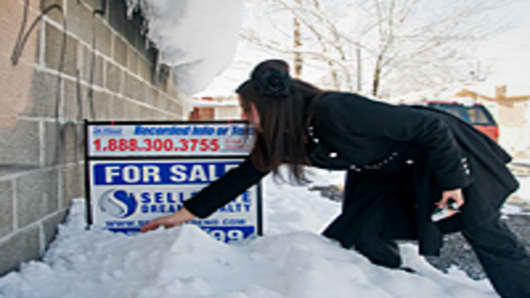
Anyone with any cash in hand should be buying a house right now.
That’s what any real estate agent will tell you, obviously, but that’s also what many investors now believe.
Unfortunately, the potential home-buying public…isn’t buying it.
January’s consumer confidence report found a drop in the number of Americans who plan to buy a home in the next six months. If, however, you take out the confidence issue, the fundamentals for buying are strong:
Home prices nationally are down 33 percent from their bubble peak, according to the latest S&P/Case-Shiller report, mortgage rates are hovering near record lows, and housing supply, while falling, is still historically high. In other words, it’s more of a buyer’s market than it’s ever been.
And yet the home ownership rate continues to fall, and rental demand, occupancies and rates continue to rise.
“Federal plans to sell real estate owned properties to investors might provide some relief, but rental value growth is still likely to hit 3 percent this year and average rental yields may rise to around 5.5 percent,” wrote Paul Diggle of Capital Economics, who believes the downturn in homeownership may still have further to run.
Both Diggle and Standard and Poors’ David Blitzer cite still tight credit as the major obstacle to housing demand. Rates are low, but to get those rates you need a significant down payment. The low down payment route, the FHA, has raised fees and premiums, which for some are a barrier to entry. A full third of the market is now all-cash.
“We have to get the demand up, we have to tighten the supply a little bit before we will see any shift in prices and we haven't seen that,” said Blitzer in an interview on CNBC. But how do you tighten supply of foreclosed homes in neighborhoods that are so empty that the homes are deemed “unsellable.” Blitzer made an interesting observation:
“Periodically in studies of urban renewal, people come up with arguments that, take such and such a neighborhood, level it, fence it off for the next fifteen years until we need the land and then come back in,” said Blitzer. “That's in effect what's going to happen to some of these areas.”
Questions? Comments? And follow me on Twitter @Diana_Olick


