

Moving to a tropical island or a mountaintop village is a retirement plan shared by many adventurous baby boomers.
AP
More than half a million retirees have moved out of the country, and the number is growing. Some may be fulfilling a lifelong dream, while others are looking for ways to stretch the value of their nest eggs.
But be careful when you purchase your one-way ticket to paradise. Some places are better for visiting than for living long-term. Hidden costs and lifestyle trials can be a drag for those retiring abroad. And being older does not make it easier.
Frustrations abound for ex-pats who face challenges that include a weakening dollar, taxes at home and abroad, and the difficulty of moving money across borders. Health-care benefits can also vary widely and often become the biggest drawback abroad.
“I wouldn’t be surprised to find that many people return after living their early retirement abroad. … Once you get to your 80s and 90s, things become tougher,” says David Kuenzi of Thun Financial, an investment management firm.
Glossy magazines and websites, sometimes sponsored by countries wanting to entice wealthy Americans, do a good job of selling destination retirements, especially to baby boomers. To avoid boomeranging from a way-too-costly vacation, here are some things to consider.
Paying Your Taxes
Expats who are still U.S. citizens are subject to most of the same income tax requirements as folks back home, and they must still file a return form annually with the Internal Revenue Service on all money earned in the U.S. and worldwide, income taken from retirement accounts included.
" wouldn’t be surprised to find that many people return after living their early retirement abroad … once you get to your 80s and 90s, things become tougherThun Financia"
There are ways to claim creditfor taxes paid overseas, but complicated tax laws in each country make the process difficult. Be prepared to spend time and money to get financial advice in both the United States and your destination site.
While there are about 50 countries that limit this "double taxation" under existing tax treaties with the United States, you can incur taxes in the country where you reside and from back home. And, as long as you are a U.S. citizen, you will still need to file tax forms. A list of countries with such tax treaties is available at IRS.gov; search tax treaties A to Z.
The Foreign Earned Income Exclusion (FEIE), allows individuals to exclude up to $92,900 of income earned in their new home country. The maximum amount changes from time to time to allow for inflationary adjustments. While most people living abroad qualify for these deductions, mastering the code can be a challenge. Read IRS Publication 54 to see if your income might be covered under this and other deductions.
Renouncing American citizenship is an option for people who want to escape U.S. taxes altogether. But the downside is that you also strip yourself of Social Security.
Access to Your Money
Although online banking and brokerage accounts make managing money from abroad much easier, funds cannot be sent to Cuba or North Korea, and there are restrictions on a handful of other countries. In addition, some foreign banks may hold Social Security checks for up to four weeks to wait for it to clear.
Hans Neleman | Stone | Getty Images
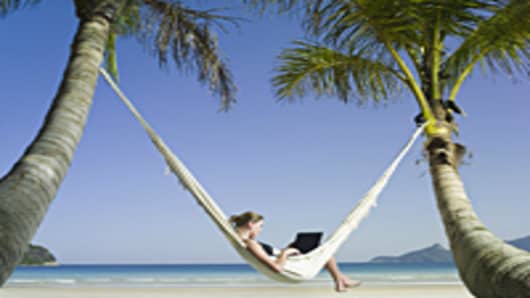
Woman in hammock using laptop
Opening a bank account in a foreign country may not be as easy you think. Some Americans have been denied access to banking services or have had existing accounts closed as a result of the tightened regulations aimed at stemming terrorism financing and money laundering. Transfers of more than $10,000 must be reported.
Regulatory burdens are also making it much more difficult for American retirees who relocate to a foreign country to keep their U.S. bank accounts without a stateside address. While banking abroad has a set of challenges, a local credit card can help cut conversion and transaction fees, which add up quickly.
Your Health
Unlike your Social Security checks, Medicare coverage stops at the border. Few U.S. employers offer health-care coverage to expat retirees, and U.S. carriers typically don't provide individual coverage to Americans living abroad.

Gen Nishino | Riser | Getty Images
Although some countries offer world-class medical facilities, as well as government-sponsored health care so affordable that it can make sense to go without health insurance, there are some countries where quality of healthcare is questionable. But keep in mind that if you plan to return to the United States and sign up for Medicare later, your premium will be 10 percent higher for each 12-month period you could have been enrolled but were not.
Your Cost of Living
Although many countries around the world have a significantly lower cost of living than Western countries, many places that once were havens for cheap retirement living are not nearly as cheap as they used to be. Some retirees end up losing money rather than saving what they had anticipated, thanks to a weakening dollar, whose long-term decline means a downward adjustment in income for those living abroad. Americans who feel the pinch of inflation at home might be shocked to find even higher, double-digit inflation in other, less-developed countries.
It is important to determine your retirement budget and allow for exchange-rate fluctuations and inflation.
Barriers to Entry
While rules vary from country to country, many expatriates need to obtain a visa and have it renewed periodically for a fee, which requires some proof of income as a way of showing that you will not become a financial burden on the government. Some countries, Canada included, want a clean bill of health to gain permanent residency.
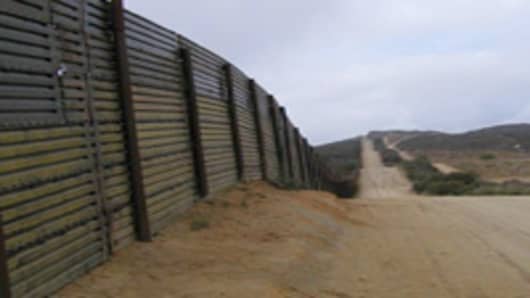
U.S. - Mexican border
Complicated tax issues also make it difficult to buy property abroad. For example, buying property in Switzerland is harder than in many other European nations because of rules imposed more than 30 years ago limiting what most foreigners can buy and where they can buy it. Foreigners who want to buy real estate near Mexico's coasts or borders need to lease the property from a bank trust.
But if the idea of retirement abroad still appeals, know this: Countries that are among the most popular retirement destinations — based on tax burden and cost of living advantages — include Mexico, Panama and Portugal. Bon voyage!