

More U.S. homes started on the foreclosure path in July, as lenders tackled a backlog of mortgages gone unpaid even as they pulled back on home repossessions.
Getty Images
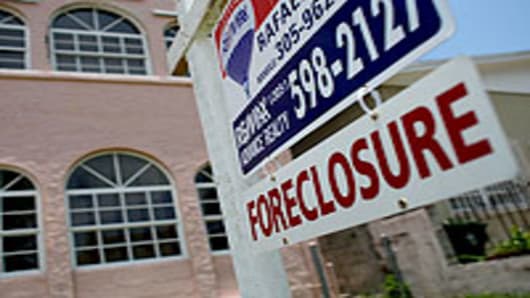
Foreclosure Sign
The number of homes that received an initial notice of default — the first step in the foreclosure process — increased 6 percent in July compared to the same month last year, foreclosure listing firm RealtyTrac Inc. said Thursday.
Filings of initial default notices have increased on an annual basis for three months in a row.
The trend comes as banks work to make up for time lost last year as the mortgage-lending industry grappled with allegations that it had processed foreclosures without verifying documents.
The nation's biggest mortgage lenders reached a $25 billion settlement in February with state officials. That cleared the way for banks to address their backlog of unpaid mortgages.
On average, 104,000 homes have entered the foreclosure process each month going back to May. That's well below the 178,000 per-month average in 2009, the year with the highest monthly average, RealtyTrac said.
The increase in homes entering the foreclosure process raises the possibility that more properties could end up being foreclosed upon in coming months. But of late, banks have been dialing back home repossessions and increasingly allowing the borrower to sell the home in a short sale. That's when the bank agrees to accept less than what the seller owes on the mortgage.
Banks took back 21 percent fewer homes last month than in July last year, RealtyTrac said. Repossessions were down 1 percent from June. They've been down on an annual basis every month going back nearly two years.
"Lenders are much less likely now than they were even a year ago or two years ago to repossess a property after they've started the foreclosure process," said Daren Blomquist, a vice president at RealtyTrac.
Completing the foreclosure process can potentially open banks up to liability if they're accused of improper procedures. And short sales, on average, sell for $25,000 more than a bank-owned property, Blomquist said.
As a result, lenders are much more likely to look for alternatives, such as a short sale, a loan modification or refinancing.
So far this year, home repossessions have averaged about 57,000 a month. That puts the nation on track for just under 700,000 completed foreclosures this year, below the 800,000 recorded in 2011.
The latest crop of homes entering the foreclosure process does not signal that there is a fresh wave of homeowners in distress and missing payments. The majority of the loans entering the foreclosure process are mortgages that date back to the housing bubble years, Blomquist said.
Even so, the increase in foreclosure-starts could boost the number of homes that end up on the market for sale at a sharp discount to other properties. That means, barring another outcome, many of the homes that entered the foreclosure pipeline in recent months could end up weighing down the values of nearby homes when they hit the market.
A stronger housing market could mitigate the impact of future foreclosures on home prices, and home sales are expected to end up ahead of last year. But many economists still say the market is years away from a full recovery.
The number of homes receiving foreclosure-related notices last month increased generally in states where the courts play a role in the foreclosure process. Among them: New Jersey, Florida, Ohio and Illinois.
Many homes on the foreclosure path were left in limbo in those states last year, while mortgage lenders sorted out the foreclosure abuse allegations.
In contrast, foreclosure activity was down sharply in Arizona and California — foreclosure hotbeds throughout the housing downturn, but states where the court does not factor into the foreclosure process.
That didn't keep California from posting the nation's highest foreclosure rate last month. One in every 325 households reported a foreclosure-related notice in July, more than twice the national average.