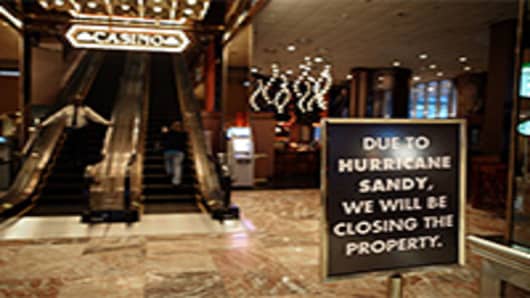
Gold: Sandy’s Economic Impact on Shopping
Hurricane Sandy, a rare, late season storm, is already having a significant economic impact and is poised to be one for the record books in both meteorological and economic terms.
The exact amount of economic impact Sandy will have cannot be finalized until well after the event; however, this storm has the potential to be larger than Hurricane Irene, which had an estimated $10-$15 billion impact last year and was in the "Top 10" most costly hurricanes.
Sandy will slow down after making landfall and is not only poised to impact the major cities of the Northeast including New York City, Boston, Philadelphia, and Washington DC/Baltimore, but will leave impressions on interior markets such as Buffalo, Harrisburg, Syracuse, and Albany, as well as Canadian cities such as Toronto and Ottawa.
When everything gets tallied up, Sandy is estimated to have an influence over one-third of the population of the U.S.
For the hardest hit areas, the economic impact will be driven by insurance losses and lost productivity due to people staying home.
Most major retailers have at least 10% of their store base in Sandy's path, with impacts varying by type of business. There are several types of businesses that experience a net-negative when it comes to events such as Sandy. Shoppers generally avoid malls during hurricanes, and since consumers are purchasing "must have" items, any "nice to have items" fall off of shopping lists. This means Sandy will be a net-negative to apparel and mall based retailers such as department, toy, jewelry, and sporting goods stores.
Sandy Impact on Retailers
Restaurants can experience a mixed impact, with fast food and casual dining often seeing a surge in traffic in advance of the storm, particularly along any evacuation routes. More formal dining locations often see a drop in customers.


