Go Symbol Lookup
Loading...

‘Fiscal Cliff’ a Drag on Banking Business: BofA’s Moynihan

 Text Size  
Published: Tuesday, 13 Nov 2012 | 8:55 AM ET
By: CNBC.com

Bank of America CEO Brian Moynihan said on Tuesday that the rising potential for a surge in both higher taxes and reduced government spending was a restraint on banking activity.
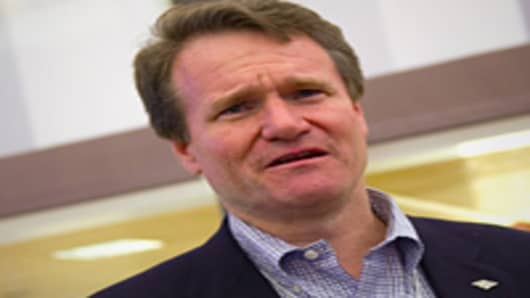
Fabrice Coffrini | AFP | Getty Images

Moynihan, speaking at the Bank of America/Merrill Lynch banking conference in New York, echoed the fears voiced by numerous other business and financial leaders in recent days about the U.S. "fiscal cliff."

Recently, JPMorgan Chase CEO Jamie Dimon said that a fix of the problem could lead to an economic boom. (Read More: Here's How the Economy 'Can Go Boom': JPMorgan's Dimon.)

Bank of America's CEO said that while a slow and steady recovery in the housing market was underway, concerns about the so-called fiscal cliff were holding back client participation in markets. He added that his bank has shed business where capital investment does not benefit its clients.

 Print
Bank of America CEO Brian Moynihan said on Tuesday that the rising potential for a surge in both higher taxes and reduced government spending was a restraint on banking activity.

   
Comments


More Comments


Add Comments


Your Comments (Up to 1100 characters):

Remaining characters

Your comments have not been posted yet.

Please review your submission to make sure you are comfortable with your entry.

Your Comments:


Featured

Contact Fiscal Cliff

Monitoring The Fiscal Cliff

  • Jason Trennert, Strategas Research Partners, and Barry Knapp, Barclays, discuss the economic outlook for next year, as the nation faces taxing times in 2013.

  • Discussing reports that companies are scrambling to offer special dividends as the January 1 tax threat of the fiscal cliff nears, with Steve Moore, author of "Return to Prosperity," and CNBC Contributor Howard Dean.

  • Congress is tossing around the idea of swapping out the paper dollar bill for a hard coin, and a government report finds the move could save taxpayers nearly $4.5 billion over 30 years, with Sean Fieler, American Principles; and Don Luskin of Trend Macro and Jim LaCamp of UBS, check the stock market.