

Today's weekly mortgage applications surveyfrom the Mortgage Bankers Associationseemed to offer a small glimmer of hope.
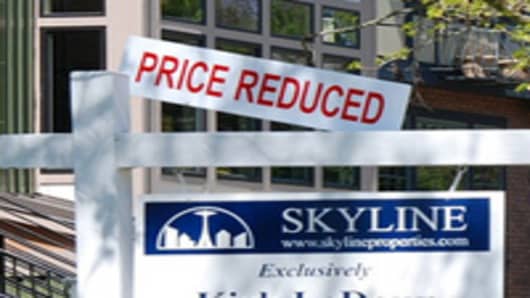
Photo by:Seven_Null7
Reduced Price
Yes, refinancings—which have been running at around 80 percent of all mortgage applications—fell despite a new record low average rate on the 30-year fixed of 4.38 percent.
Not so good.
But on the other hand, purchase applications rose 2.4 percent, largely driven by a 4.5 percent increase in government purchase applications (FHA).
Great, except for that last part.
Government purchase applications have been driving the market for the past year, accounting for, at times, nearly half of all new loans. That may be about to change. New premium authority (translation: higher prices) goes into effect next week, on October 4. New seller concessions policies are about to go into effect as well.
"These two policy changes will increase the opportunity for private capital to return to the market while improving the safety and soundness of FHA," FHA Commissioner David Stevens tells me.
The trouble is, there's really nobody out there in the mortgage market other than Fannie and Freddie. And their loan limits, as well as super-tight underwriting and fees, are pricing many potential buyers/borrowers out of the housing market.
"These two policy changes will increase the opportunity for private capital to return to the market while improving the safety and soundness of FHA."
"While there is still clearly a long way to go for private capital participation levels to reach more normalized levels, we are seeing the beginning of some increased levels of private capital," argues Stevens.
He cites a 60 percent increase in jumbo loan production in Q2 (according to National Mortgage News). The trouble is that was largely refinancings, not new-purchase loans, and dare I mention a 60 percent increase from a market on complete life support still isn't exactly healthy.
"The private-label RMBS market for new mortgage origination has been dormant since early 2008, save for one transaction completed this spring," Tom Deutsch, Executive Director of the American Securitization Forum testified before a House committee this morning.
I'm not saying private capital isn't preparing to come back—there is an awful lot of cash on the sidelines. I'm just saying it's nowhere near where it needs to be to reinvigorate the housing/mortgage market now. Banks don't have the cash either, as they have been and will be further constrained by various policy initiatives requiring higher capital levels.
Granted, FHA's share is falling overall, opening up share for the private mortgage insurers, and Stevens argues that will open up more opportunities for borrowers.
"MI (mortgage insurance) in conjunction with a Freddie or Fannie mortgage lays the groundwork for establishing the threshold levels at which point private capital pricing can succeed in attracting the consumer more broadly," he says.
Look, I'm all about laying the groundwork for the future, but we need buyers back in the market right this minute, as sales plummet and prices waiver. Analyst Meredith Whitney said on CNBC Tuesdaythat October will bring "a really ugly Case Shiller number."
"Unless you have near perfect credit and a substantial down payment, FHA is still the only game in town for a large number of Americans," notes Guy Cecala of Inside Mortgage Finance.
Mortgage-purchase applications are 32 percent lower than they were last year, and they weren't great last year. While still the cheapest game in town, FHA loans are about to get more expensive, and that's going to knock the numbers down yet again.
Questions? Comments? RealtyCheck@cnbc.comAnd follow me on Twitter @Diana_Olick
