![]()
OUR PROGNOSTICATORS
- Patrick Allen on Europe
- Deepanshu Bagchee on Asia-Pacific
- Julia Boorstin on Media/Entertainment
- Albert Bozzo on Economics
- John Carney on Wall Street
- Christina Cheddar-Berk on Consumers
- Scott Cohn on Crime
- Alex Crippen on Warren Buffett
- Patti Domm on Markets
- Sharon Epperson on Commodities
- John Fortt on Technology
- Herb Greenberg on Retail
- Gary Kaminsky on Bonds
- Phil LeBeau on Autos
- Diana Olick on Real Estate
- Suze Orman on Personal Finance
- Bob Pisani on Stocks
- Darren Rovell on Sports
- Brian Shactman on Energy
- Brian Sullivan on Currencies
- Greg Valliere on Washington
SLIDESHOW
Diana Olick: Real Estate
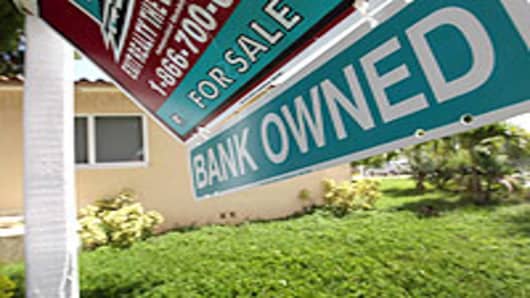
1. Home prices will fall another 5 percent through Q2 before bottoming toward year's end.
Prices are already on a downward trajectory, as foreclosure inventories rise. Banks/mortgage servicers are finally working through a huge backlog of delinquent loans, and as those distressed properties come to market, they will consequently lower home prices. With lower conforming-loan levels, as well as a tight lending environment and the possibility of rising mortgage rates, prices will bottom out in the fall.
2. Foreclosure inventories will rise while new delinquencies remain elevated.
Inventories will continue to rise, as around three million distressed properties progress to final bank repossession. Banks will likely ramp up the process following the usual holiday slowdown, especially given positive rulings on the MERS front (the auto-uber recorder for so many loans), and judicial states lifting their moratoria. Foreclosures will come quickly through the winter and spring months then abate toward year's end. The downward pressure on overall home prices will put more borrowers underwater and in turn keep delinquencies elevated, although not much higher than now.
3. Rents will rise, as will rental occupancy rates.
Until the employment market really starts cooking, young employees and potential first-time home buyers will remain on the sidelines, waiting for home prices to bottom. That means continued high demand for rental apartments, especially in higher-priced markets. The big question is: When do rents get too high vs. the cost of home ownership and push people back to buying?
4. Housing starts to be a tale of two markets.
Single-family home building will struggle to stay above a 600,000-unit annualized pace, as builders continue to compete with foreclosed properties. Slight improvement in demand will keep them going, but not by much. Meanwhile, the minimal supply of multi-family apartment buildings will keep investors pouring money into new construction. Builders will respond with increased multi-family starts, not just in trophy markets, but also mid-sized ones where inventories are lower.
![]() |
5. Government will stay out of housing.
With a presidential election in its sights, the Obama administration isn't going to take any drastic measures that might upset voters. While housing continues to be a thorn in its political side, calls for a massive principal reduction program or a real plan to take apart Fannie Mae and Freddie Mac are far too controversial. We will see only small moves, like the recent refinance plan. Oh, and as for that settlement with the big banks and the state attorneys general? If it happens, and at this point that's a big if, it will likely not include some of the key states — New York, Massachusetts and California — and also likely lack real teeth.
- The economy is relatively resilient but there are some decisions that could hurt, says this analyst.
- To escape taxes or political uncertainty, millionaires and billionaires are migrating like never before.
- Some places are kinder than others when it comes to selling homes, as these cities seem to be.
- Here are the 15 publicly traded stocks, by value, that are the biggest holdings of Berkshire Hathaway.
- Some restaurants are taking kid favorites like peanut butter and jelly and turning them into adult fare.
- What we have here are the 10 richest counties in America, according to the average income.