You must never do that.
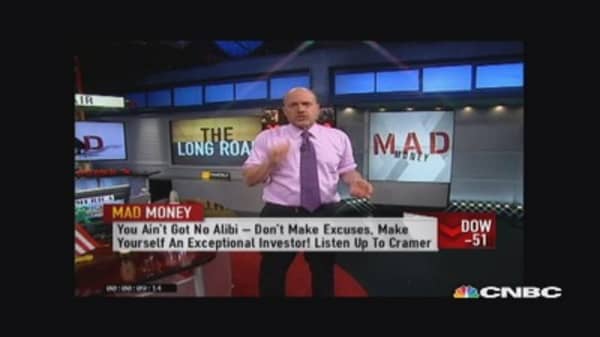
Cramer believes it's critically important to become actively involved with your investments, monitoring earnings reports, government documents and newspaper reports - something he calls homework.
Then, what's an example of a long-term investment?
"Buying Facebook as a bet that the company will dominate mobile in the years ahead is an example of a long-term investment," Cramer said. But you must always revisit the long-term thesis and makes sure it remains in tact. If it doesn't or if the thesis has been fulfilled, it's then time to sell and put that money to work elsewhere.
And that can happen in less than a year.
--------------------------------------------------------------
Read More from Mad Money with Jim Cramer
Cramer's top technique for beating other pros
Stock strategy that could yield 30%, in one day!
IPOs: Cramer's secret for success
--------------------------------------------------------------
Cramer fears too many individuals make the mistake of not regularly visiting their long-term investments. "They all have expiration dates," he said.
"You have to go into a long-term investment with an exit strategy," Cramer added. And although you may have expected the thesis to hold for a year or more, it may not.
Once it's been fulfilled, whether a year has passed or only a few days, it's time to move on.